


Your bank, flights, and emails depend on a hidden "Digital Grid." Does AI make them more vulnerable?
Recent outages have disrupted everything from travel and banking to the technology we use every day. But the bigger story is what these disruptions reveal about the interconnected digital infrastructure undergirding our daily lives. Learn how this hidden web of technology can affect your personal information and what you can do to stay safer.


Many have been left confused and worried after major disruptions recently affected services people depend on to work, travel, bank, and communicate, with tech outages involving Microsoft, the FAA, United, several banks, and Apple occurring between November 12 and 17.
At the same time, Google warned that “the era of autonomous attacks has arrived,” reporting that bad actors are now using AI-powered tools to continuously scan for software vulnerabilities, identify weaknesses, and build attacks with little to no human intervention.
There’s no evidence that AI caused this week’s outages or that the incidents were part of one coordinated attack. But together, these developments raise a bigger question about what disruptions across seemingly unrelated services reveal about the infrastructure behind everyday life. What happens when the Digital Grid is at risk?
The infrastructure we depend on is changing
You may think you're interacting with a bank, airline, retailer, school, or doctor's office. But behind that recognizable organization can be numerous technology providers handling things like cloud infrastructure, authentication, payments, communications, and customer data.
“The ‘Digital Grid’ is the new critical infrastructure. It's no longer just about water or electricity. It's about the digital systems that everything else depends on.”
– Iskander Sanchez-Rola, Senior Director of AI & Innovation at Gen (the company behind Norton)
Sanchez-Rola coined the term the “Digital Grid” because just as the traditional grid is essential to everyday life, this Digital Grid is made up of the shared digital platforms and systems that increasingly underpin how businesses, applications, and online services operate.
As Sanchez-Rola put it, “The power grid supports our physical world. The Digital Grid keeps our online lives running.”
The infrastructure itself isn't new. What is changing is how much of everyday life relies on it and the potential scale of the threats it faces. As autonomous AI agents become more capable of discovering vulnerabilities and helping attackers operate at greater speed and scale, weaknesses that were once isolated cybersecurity concerns could potentially have broader consequences.
The apps and websites you interact with are reliant on the businesses behind them, while those businesses are reliant on technology providers. Not every dependency creates a vulnerability, but an issue several steps removed from the website or app you use can still affect whether you can access a service.
The recent FAA disruption offers one example of how such dependencies can work. The agency said instability in its telecommunications network, caused by a massive spike in network traffic that overloaded computer systems, disrupted aircraft communications and radar feeds, ultimately leading to a nationwide ground stop. Its investigation identified two potential locations behind excessive data flooding its systems, including a site where network service provider L3Harris had been working.
What looks like one organization's technology problem can actually reveal a much longer chain of dependencies.
There doesn’t need to be an attack for critical infrastructure to fail
When several major services experience outages in a short period, it's understandable to wonder whether they're connected. But disruption itself isn't evidence of a cyberattack.
“Based on the available information at the moment, I don't think they're related,” said Michal Salát, Threat Intelligence Director at Gen.
The FAA, for example, said it had no indication its November 13 disruption was the result of a cyberattack.
That's an important distinction. Complex digital infrastructure can experience disruption without a malicious actor deliberately taking it down. And because services can depend on other providers far behind the scenes, a problem in one part of that chain can potentially have consequences elsewhere.
In other words, interconnected systems can create interconnected consequences, even without an attacker.
AI raises the stakes
AI didn't cause the recent outages. But AI can change what cybercriminals are capable of doing when they look for weaknesses in the systems and organizations people rely on.
AI-assisted tools can potentially make discovering vulnerabilities faster and easier to scale, according to Gen Threat Labs researchers.
"A year ago, two years ago, that would be done by a person with a tool,” Salát said. “It would take forever. Now we're getting many a year for the same amount of effort. It is enabled by the sheer knowledge that's packed into the language models and the agents.”
AI can also change the scale and sophistication of scams aimed directly at consumers.
"They used to be generic, and now they are hyper-personalized at a scale that was completely impossible before,” Sanchez-Rola said.
The potential targets aren't limited to major technology companies, banks, or airlines, either. And smaller businesses or local organizations might be even more vulnerable because they likely don’t have the same level of protection as a major company — scammers can get useful personal information from them as well.
Pieces of your digital identity may exist across dozens of large and small organizations. Your child's school may have family contact details, your gym may have contact and payment information, and your retail accounts may contain addresses and purchasing histories.
“Small players have always been targets, but now they’re more vulnerable than ever, because AI agents make it much easier to carry out these attacks,” Sanchez-Rola said.
That matters because a cybercriminal doesn't necessarily need to target a major corporation to potentially get access to valuable information about you.
What happens to your information after an outage?
An outage doesn't mean your information was stolen, but a service coming back online doesn't necessarily tell you whether your information was exposed, either.
“Not seeing breached data available online this close to the incident is not the proof that nothing has been breached,” Salát said.
Stolen data can surface months afterward, he noted, either because attackers take their time with it or because it can take weeks to prepare information for sale on the darknet.
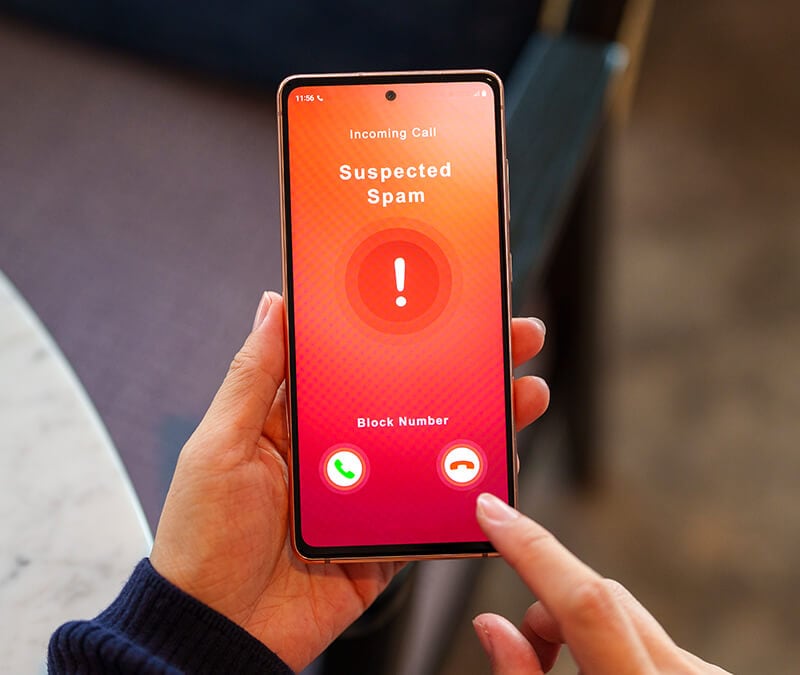
There's also a more immediate threat to watch for: scammers can take advantage of the uncertainty surrounding a real outage.
Consumers may already be expecting updates, recovery instructions, refunds, or other communications from an affected company. That can make a fraudulent message feel more believable.
Sanchez-Rola offered one example of what such a scam message could look like: “There was a problem during the outage and your data was lost. To recover it, you need to follow these steps.”
The messages often create urgency by referencing the disruption and directing the recipient to click a link, sign in, provide payment information, or “confirm” personal details. The fake site or interaction can then be used to capture credentials or other sensitive information.
What to do during and after an outage
You cannot control an outage. You can control what happens to your information afterward.
A few basic security practices can help you stay more in control when the technology you depend on fails:
- Verify recovery messages through official channels: Rather than using a link in an email or text, navigate independently to the company's official website or app.
- Keep watching your accounts after service is restored: Monitor financial and other important accounts for unfamiliar activity, even after an outage leaves the news cycle.
- Use unique passwords: That can help keep a compromised credential for one service from jeopardizing other accounts.
- Use two-factor authentication or passkeys where available: Another authentication factor can make it more difficult for someone with a stolen password to access an account.
- Be skeptical of unexpected recovery requests: An outage doesn't make a request for a password, two-factor authentication code, payment details, or other sensitive information legitimate.
When infrastructure wobbles, advanced tools can help separate legitimate communications from attempts to take advantage of the confusion. Norton 360 Deluxe can help spot potential scam messages and block suspicious links sent during the confusion of an outage.
Its security features include:
- Advanced Scam Protection: Helps flag fake texts and block bogus sites.
- Deepfake Protection: Automatically detects deepfakes and identify scams in videos that include giveaway scams, cryptocurrency fraud, and investment schemes.
- Password Manager: Creates and stores passwords, bank card info, and other online credentials in our encrypted online vault.
The digital infrastructure behind everyday life may be complicated, interconnected, and fragile. But an extra layer of protection can help keep you safer online during uncertain times.
Accurate as of November 18, 2026, based on available information. This article may be updated as additional information about the recent outages becomes available.
Editors’ note: Our articles offer educational information and are written to raise awareness about important topics in Cyber Safety. Norton products and services may not protect against every type of threat, fraud, or crime we write about. For more details about how we research, write, and review our articles, see our Editorial Policy.






Want more?
Follow us for all the latest news, tips, and updates.