






Job scam statistics to know for 2026
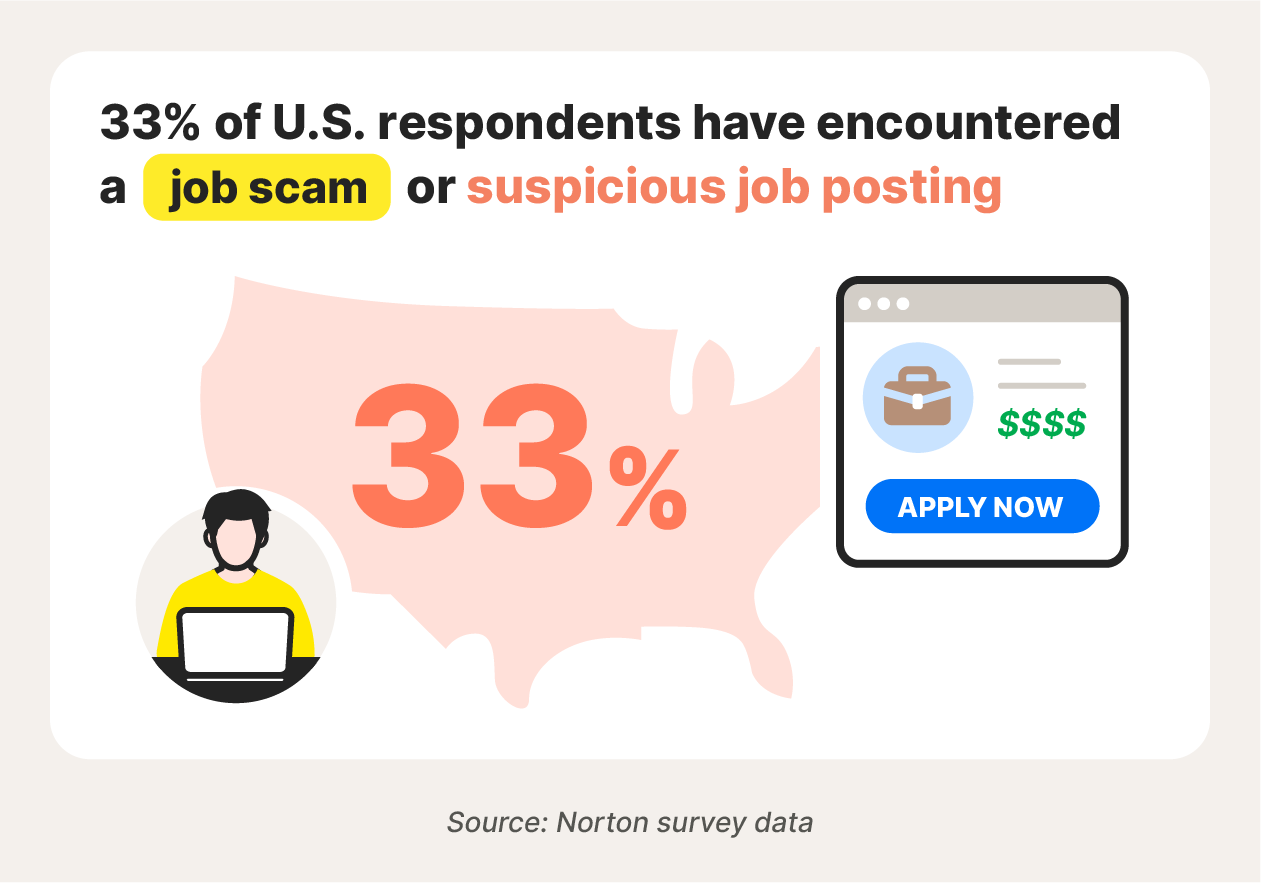
Job scams are a costly threat to U.S. job seekers. According to a new survey from Norton,* 33% of respondents report encountering employment-related scams or suspicious postings on job sites. Learn more about the threat landscape of employment scams.


Scammers are using sophisticated social engineering tactics, as well as AI technology, to impersonate trusted employers like Amazon and the USPS on digital recruitment channels. To better understand the scale of the problem, Norton Research analyzed recent survey data examining how often Americans encounter job scams, which brands are most commonly impersonated, and the financial impact on victims.
Key job scam statistics
1. 33% of U.S. respondents have encountered a job scam or suspicious job posting at some point in their lives, including fake recruiters, fraudulent company websites, or phishing messages.
2. Our survey indicates that Gen Z job seekers are more than twice as likely as Baby Boomers to encounter job scams (44% vs. 21%).
3. Nearly 1 in 4 people who reported encountering a job scam became victims (23%), meaning 8% of all U.S. adults surveyed encountered a job scam and then fell for it.
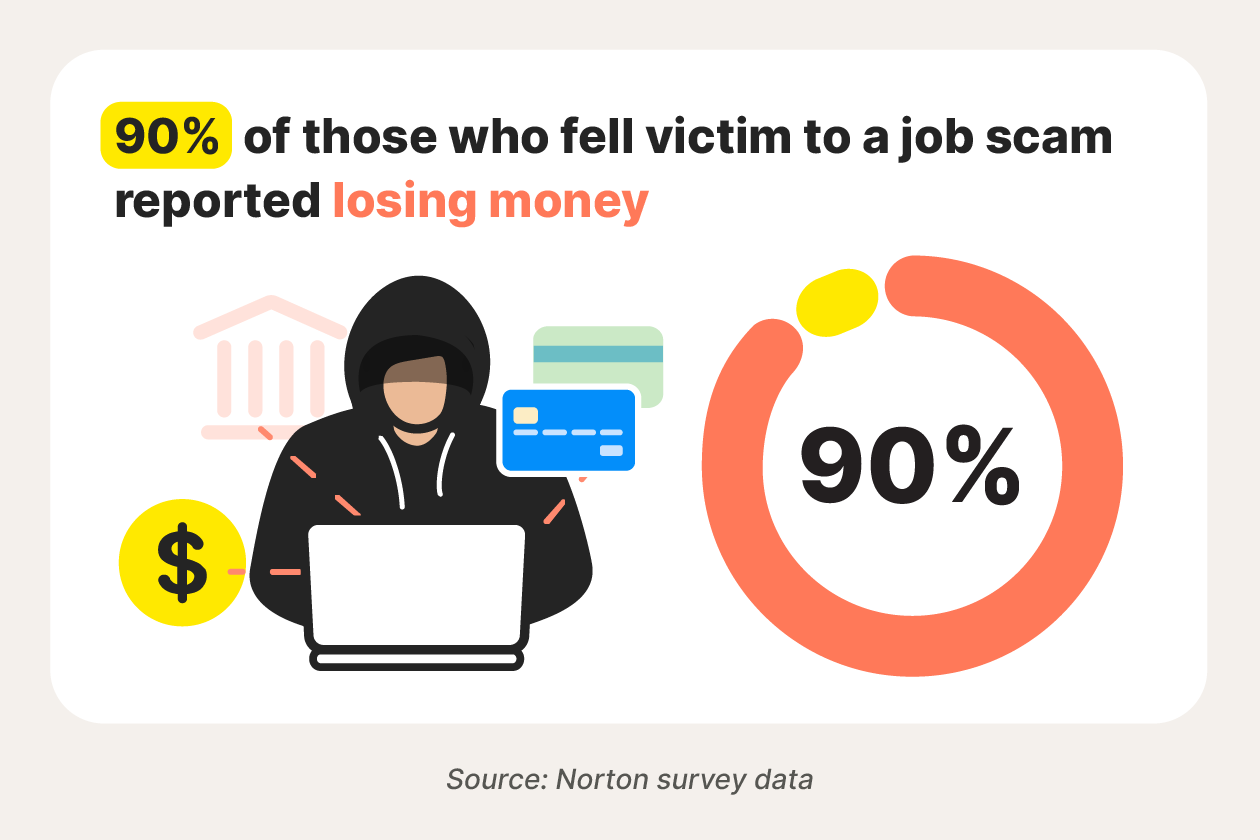
4. Financial loss was very commonly reported among victims: 90% of those who fell victim to a job scam reported losing money.
5. The average amount lost per job scam victim was around $8,900, underscoring the high financial impact of these schemes for respondents.
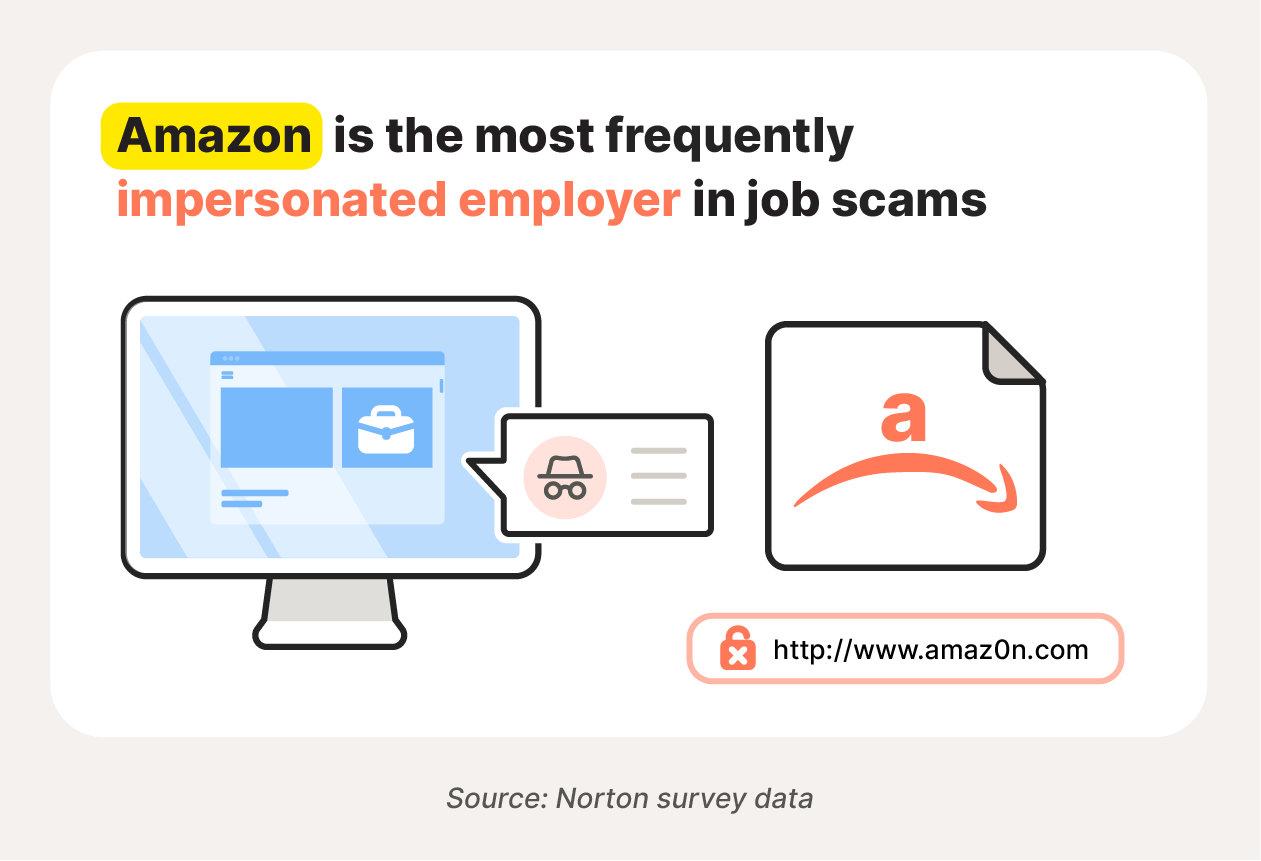
6. Amazon was the most commonly reported impersonated employer, cited by 30% of respondents who encountered a fraudulent or suspicious job posting.
7. Remote work agencies are the second most reported impersonated entity (29%), reflecting how scammers exploit demand for flexible, work-from-home jobs.
8. Other commonly reported targets for impersonation included the U.S. Postal Service (17%), UPS (17%), FedEx (15%), and U.S. government agencies (15%).
9. Only 61% of U.S. adults say they are confident in their ability to spot a job scam, despite the victimization and losses.
Steer clear of job scams
Job scams often exploit urgency, trust in well-known brands, and the appeal of flexible or high-paying roles. But exercising caution and carefully verifying potential employers can reduce risk.
- Be wary of unsolicited job offers, especially those sent via text message or personal email accounts.
- Be cautious with attachments. Treat PDFs or other attachments as suspicious. Scammers have been using malicious PDF files to deliver malware to job seekers.
- Verify recruiters and companies using official websites and direct contact channels.
- Avoid sharing sensitive information, like your date of birth, Social Security number, or financial details, early in the hiring process.
- Don’t pay upfront. Treat requests for upfront “application” fees, equipment fees, or cryptocurrency transfers as red flags.
- Slow down. Remember that pressure from a potential employer to act quickly is a common scam tactic.
- Be wary of fake websites. AI is making it easier than ever to quickly build scam websites that look and feel real — leading cyberthreat researchers to dub them “Vibe Scams.”
Leveraging the power of AI, Cyber Safety software like Norton 360 Deluxe can help job seekers steer clear of employment scams and related phishing attempts. Norton 360 Deluxe helps block malicious websites, detect fraudulent messages, and fight malware, adding a layer of security to your digital life. These protections can reduce scam risks before serious financial harm occurs.
Survey methodology
*The study was conducted online within the United States by Dynata on behalf of Gen Digital (Norton’s parent company) in November 2025 among 1,000 adults ages 18 and older. Data is weighted where necessary by age, gender, and region to be nationally representative.
Editors’ note: Our articles offer educational information and are written to raise awareness about important topics in Cyber Safety. Norton products and services may not protect against every type of threat, fraud, or crime we write about. For more details about how we research, write, and review our articles, see our Editorial Policy.







Want more?
Follow us for all the latest news, tips, and updates.