


Android security: Features, threats, and best practices
Android devices include built-in security features that help defend against threats like malware, phishing, and harmful apps — but they're not foolproof. Keep reading to learn what Android security does well, where it falls short, and how a dedicated security app can add another layer of protection for your phone or tablet.







How secure is Android?
Android is the second most popular mobile operating system in the U.S. and is widely regarded as secure, with a range of built-in protections designed to keep users safe. These include Google Play Protect for malware detection, spam and scam filtering, encryption for sensitive data such as passwords and payment information, and monthly security updates that patch vulnerabilities and address newly discovered threats.
That said, the very fact that Android devices are so widespread makes them a priority target for hackers, scammers, and other cybercriminals. So, although its security features provide effective protection against many threats, risks like malware hidden in shady apps and phishing links sent in texts can still slip through and leave you vulnerable to harm.
Key Android security features
Android has a wide range of built-in tools that work behind the scenes to protect your device and data from harm. These features help block threats, lock down lost devices, and add extra layers of protection against everyday risks. These are some of the main Android security features that it’s worth knowing about.
Spam and phishing protection
Android has built-in spam and phishing defenses across its core apps. Google Messages, the default SMS app, aims to filter suspicious texts before you even open them, for example. It can help block potential smishing attempts and warn you if a message you've received contains a link that looks dangerous.
The Phone app adds another layer of protection against scammers, with built-in Caller ID and spam protection that analyzes unknown incoming calls and alerts you to likely scams in real time.
Google Play Protect
Built into the Play Store, Google Play Protect is Android’s main malware defense system. It scans apps before you install them to help you avoid accidentally downloading anything harmful. But it also regularly scans all of your installed apps, meaning it can catch potentially dangerous new updates or third-party apps, too.
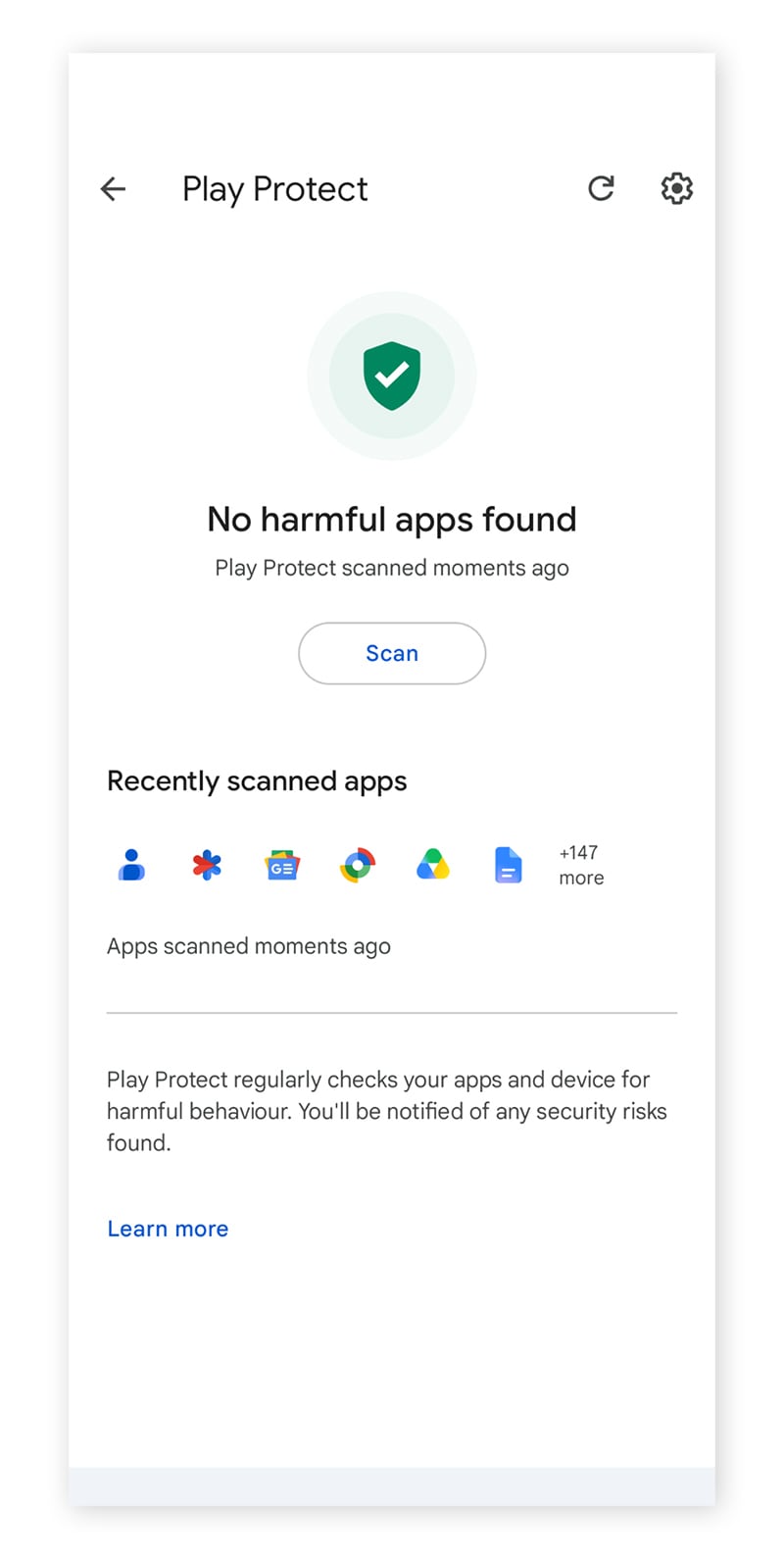
Google Play Protect is a powerful built-in foundation for device-level malware and virus protection. For extra protection, you can add an extra layer of defense with a dedicated app like Norton Mobile Security for Android, which also includes AI-powered scam detection and Wi-Fi security features.
Two-factor authentication (2FA)
Android supports 2FA, an account security feature that requires a second type of verification beyond a password when you log in to accounts. This verification could be a short code sent to your inbox or a fingerprint scan. It means that even if someone has your password, they won’t be able to hack your account.
The main 2FA feature in Android is the ability to use your phone itself as an authenticator. This allows you to log in to your associated Google account on other devices seamlessly, approving the log-in request with a simple tap while ensuring people without access to your phone are locked out.
Payment protection in Google Wallet
When you make a contactless or online payment with a card saved in your Google Wallet, your real card number is never shared with the merchant. Instead, Android creates a virtual account that's unique to your device and used in place of your actual card details during the transaction.
This means that even if a merchant suffers a data breach, your actual card number can't be exposed, because it was never transmitted in the first place. Plus, each payment is authorized through your device's biometric or PIN unlock, adding a layer of identity verification at the point of sale.
Automatic cloud backups
Android automatically backs up and encrypts key data like your contacts, call history, device settings, and SMS messages to your Google account. This is useful on a practical level for accessing your data when you don’t have access to your phone. But it also has security benefits.
If your phone is lost, stolen, or damaged, for example, it’s quick and easy to restore your data to a new device. You just have to sign in to your Google account during setup, and your apps and settings are restored. It also means a factory reset performed as a security measure doesn't mean you lose all of your data.
Camera and mic indicators
Whenever an app is actively using your camera or microphone, Android indicates it with a green icon in the top corner of the screen. This gives you a real-time visual cue that your device's sensors are in use, which can reveal if an app is using your camera or mic without your permission.
You can tap the green icon when it appears to see exactly which app is using your camera or microphone, and tap See recent access to jump straight to the permissions dashboard to revoke access if needed.

App permissions dashboard
The Privacy Dashboard in Android gives you a centralized view of which apps have access to sensitive permissions, including your location, camera, microphone, and contacts. You can review permission usage over time, revoke access for any app directly from the dashboard, and set permissions to expire automatically after a single use.

This is particularly useful for spotting apps that are accessing data they have no clear reason to need, like a simple single-player game requiring access to your contacts, for example. Overly broad permissions can be a sign of malware or spyware at worst, or an app that doesn’t respect your privacy at best.
Google Password Manager
Google Password Manager is built into Android and is available automatically when you sign in with a Google account. It works across Chrome and many other Google apps, allowing you to save, autofill, and manage passwords without downloading any additional software.
Similar to Norton Password Manager, Google Password Manager lets you generate, securely store, and autofill strong, unique passwords for all your accounts. It also includes cross-device syncing, so you can access your passwords on all your Android devices or Chrome instances.
Regular security updates
Google releases regular Android security patches to fix known vulnerabilities across the OS. The details of these patches are publicly available via monthly security bulletins. This helps keep Android devices protected against new threat vectors, like emerging malware strains or new social engineering techniques.
Safe mode
Android’s safe mode allows you to power your phone on in its most lightweight state, with only essential system apps enabled. If your device is acting unusually, using safe mode can help you determine whether the issue is being caused by a third-party app that might be infected with malware.
To reboot into safe mode, pull down from the top of your screen twice to open the system tray, tap the power icon to open the power options, and then long-press the power icon until you see a message that says something like “Reboot to safe mode.”
Theft protection and Find My Device
Android's theft protection features are designed to help secure your device if it's lost or stolen. Theft Detection Lock uses on-device sensors to detect motion patterns commonly associated with phone theft, such as a sudden snatch, and automatically locks the screen.
If your device does go missing, Find My Device lets you locate it on a map, remotely lock it, play a sound, or erase its data to help protect your personal information.
Common Android security threats
Despite the strong built-in protections and security features, Android devices can still be vulnerable to threats such as advanced malware, scams, and dangerous networks.
These threats aren’t unique to Android by any means, but understanding them can help you spot risks and take action before your device, data, or bank account is compromised:
- Malware: Google Play Protect helps keep apps from the Play Store safe by scanning for malware, but apps downloaded from third-party sources may contain malicious software. Malware can steal personal information, cause performance issues like crashing apps, or slow your device by running harmful processes in the background.
- Phishing and smishing: Phishing emails, phone calls, and text messages attempt to trick you into revealing passwords, payment details, or other sensitive information by impersonating trusted organizations. Android can block some of these scams, but convincing attacks can still get through, making caution essential.
- Spyware: Spyware on Android devices can secretly monitor your activity, track your location, steal personal information, or access your microphone and camera. It often hides inside seemingly legitimate apps and runs unnoticed. Regular scans with reputable mobile security software can help detect and remove these threats.
- Public Wi-Fi attacks: Public Wi-Fi networks in places like airports and cafés can expose your data if they're unsecured or malicious. Without a VPN, attackers may intercept sensitive information you transmit, increasing the risk of account compromise, identity theft, or other cyberattacks.
- SIM swap fraud: SIM swapping occurs when criminals convince your mobile carrier to transfer your phone number to a SIM card they control. They can then intercept two-factor authentication codes, reset passwords, and take over your online accounts, including banking and email services.
It’s also worth noting that rooting your Android phone introduces lots of additional risks. This process involves modifying your device’s system settings, which can often remove built-in security measures and open the door to system- or app-level attacks if you’re not careful.
Tips to boost security on Android devices
Android gives you the security framework you need to keep your device and data safe. But it’s not a completely hands-off experience — here are some of the most important steps to take to protect your Android phone or tablet:
- Keep your OS and apps updated: Install Android security updates and enable automatic app updates to protect against newly discovered vulnerabilities and emerging malware.
- Download apps from the Play Store: Stick to the official Google Play Store whenever possible. Google Play Protect scans apps for malicious code, reducing the risk of installing fake apps or harmful software.
- Review and limit app permissions: Regularly check which apps can access your camera, microphone, location, contacts, and other sensitive data. Revoke unnecessary permissions or uninstall apps that request more access than they need.
- Turn on Find My Device: Turn on Find My Device so you can locate, lock, or remotely erase your phone if it's lost or stolen, helping protect your personal information.
- Get a mobile security app: A reputable mobile security app can complement Android's built-in protections by detecting and removing malware, stopping pop-up ads, and blocking malicious websites and spam calls.
- Use a VPN: A VPN encrypts your internet traffic, helping protect sensitive data when you're connected to public or unsecured Wi-Fi networks.
- Use a strong PIN or password: Instead of easy-to-guess passcodes like 1234, use a strong PIN, secure password, or biometric authentication to make unauthorized access more difficult.
- Be cautious of scams: Be constantly wary of the risk of scams, avoiding clicking unknown links, screening suspicious calls, and taking steps to stop spam texts or emails that try to trick you into sharing personal info.
Protect your Android devices and more
Your smartphone holds some of your most valuable personal information, making it a prime target for scams, malware, and other cyber threats. While Android includes built-in security features, adding another layer of protection can help you stay ahead of evolving attacks.
Norton 360 Deluxe combines real-time protection against malware and ransomware with AI-powered scam detection, a secure VPN, and a built-in Password Manager. Better yet, one subscription helps protect up to five devices — including Android phones, iPhones, Windows PCs, and Macs — so your entire digital life stays better protected.
FAQs
Which is more secure, Android or iOS?
Both Android and iOS have robust device security, protecting users against many of the major mobile threats. However, iOS is typically deemed slightly more secure because it offers less control and customizability than Android. This means you’re less likely to accidentally install something harmful or disable a critical security feature on an iPhone or iPad than on an Android device.
How can I run a security scan on my Android phone?
You can run a scan using Google Play Protect in the Play Store settings. It checks installed apps for harmful behavior. For deeper scans, a trusted mobile security app or a malware scanner tool can help detect malware and other threats.
Do Android phones have built-in security?
Yes, Android includes built-in protections like app scanning, device encryption, biometric locks, and Find My Device. Regular security updates also help patch vulnerabilities and improve overall protection.
How do I protect an Android phone from hackers?
Keep your device updated, use a strong PIN or password, turn on two-factor authentication, and avoid suspicious links or downloads. Adding a reputable mobile security app and using a VPN on public Wi-Fi can further reduce your risk.
Editors’ note: Our articles offer educational information and are written to raise awareness about important topics in Cyber Safety. Norton products and services may not protect against every type of threat, fraud, or crime we write about. For more details about how we research, write, and review our articles, see our Editorial Policy.




Want more?
Follow us for all the latest news, tips, and updates.