







Google’s Dark Web Report: What to do after it shuts down
Google’s discontinued Dark Web Report scanned portions of the dark web for sensitive data tied to Google accounts. Learn more about dark web scans, and find out how Norton 360 with built-in Privacy Monitor and Dark Web Monitoring can help you stay more informed about where your personal information is exposed online.






Google recently announced it will discontinue its Dark Web Report feature in early 2026. Scans for new dark-web data ended on January 15, and the tool is shutting down completely on February 16. At that point, all associated monitoring data will be deleted. This change may leave users who relied on Google for breach alerts in the lurch.
Fortunately, other security tools continue to provide similar — and often more comprehensive — dark web monitoring. Read on to learn more about alternative ways to scan the dark web for your personal information and why dark web monitoring is just as important now — for both consumers and small business owners — as it ever has been.
What is (or was) Google’s Dark Web Report?
Google’s Dark Web Report was a security feature that helped users check whether their personal information had been exposed in data breaches and subsequently shared on the dark web — an unregulated, hidden part of the internet where cybercriminals typically trade in stolen data.
Google scanned known breach databases, dark-web marketplaces, and other onion sites for details linked to users’ Google accounts, such as email addresses. In some cases, it could also flag exposed passwords, phone numbers, or names, depending on the available breach data.
If Google found a match, it sent an alert explaining what information was exposed. The report also suggested basic next steps to take after a breach, like changing compromised passwords or enabling 2FA. But the tool was limited in scope: it mainly monitored data connected to a Google account and didn’t provide comprehensive identity protection services.
Why is Google shutting down its Dark Web Report?
Google says its primary reason for shutting down the Dark Web Report was due to feedback that the feature did not provide users with sufficiently clear next steps to take after an alert. Google states that it plans to focus on other tools to help users better protect their information.
Why dark web scans still matter
Dark web scans matter because data breaches — where personal data is stolen and often exposed on the dark net — are still a very real, and escalating, threat. According to the Q4 Threat Report from Gen, the number of breached events climbed by 175% quarter over quarter, with a steady upward trend throughout 2025.
This rise in breaches means more personal information is being shared across hacker forums, dark web marketplaces, and other covert corners of the internet. Worse, Gen data suggests that threat actors are getting better at stealing quality data, like passwords, exposing victims to greater risk. In other words, it’s no longer just lists of email addresses getting leaked, but often complete login credentials.
If cybercriminals get their hands on enough data, they can use it for identity theft, account takeovers, personalized phishing attacks, fraud, and other malicious activities.
Why small business owners should care
The rise in data breaches — combined with the loss of Google’s free dark web scan — is especially concerning for small business owners and freelancers because the same login credentials are often used across personal accounts, business email, financial tools, and cloud services.
For small businesses, data exposure can translate to account takeovers of business emails, unauthorized access to accounting or payment platforms, fraudulent invoices, payroll diversion, and lockouts from essential tools needed to run day-to-day operations.
What dark web monitoring actually does
An essential part of a proactive cybersecurity strategy, dark web monitoring scans the dark web for exposed personal information and alerts you if your data is found. It performs the following basic functions:
- Searches underground sources where stolen credentials and personal information are traded or leaked.
- Alerts you if your data is found in known breach dumps or forums.
- Helps advise you on how to take action before attackers can misuse your information.
See if we find your information on the dark web
By simply entering your email, we search for potential threats to your identity.
We do not search all personal information at all criminal websites and may not find all breached data. We use the information you provide in accordance with our Global Privacy Statement.
Alternatives to Google’s Dark Web Report
Even without Google’s Dark Web Report, you still have options for getting a better understanding of where your personal data is exposed online — on the dark web or the surface web.
Cyber Safety software with dark web monitoring
Dark web monitoring is now a feature included in several major antivirus and cybersecurity tools, including Norton 360 Deluxe. And these providers can often monitor for more data points than Google’s Dark Web Report did.
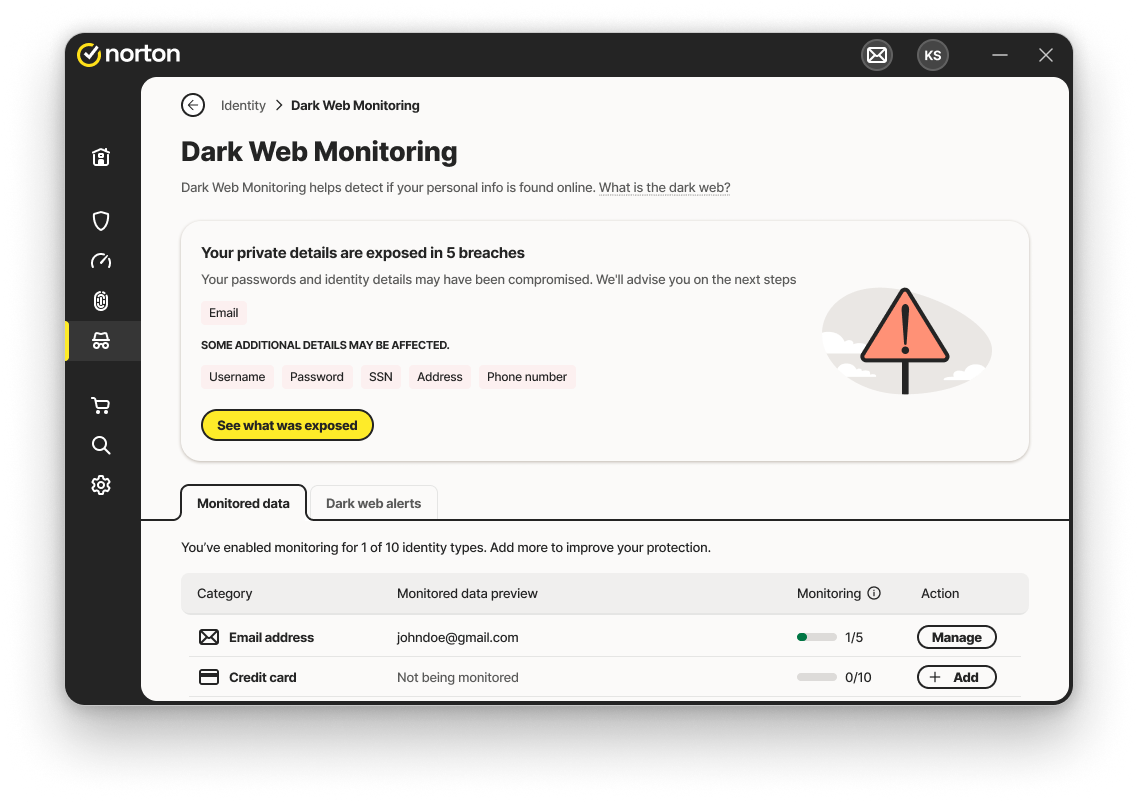
For example, the built-in Dark Web Monitoring feature in Norton 360 Deluxe* can scan the dark web for personal information like your address, phone number, credit card number, driver’s license number, bank account number, gamer tag, or even your mother’s maiden name (if you choose to add these data points for monitoring).
Plus, you’ll get ongoing notifications if the details you choose to monitor are found to appear in a new data breach.
Cyber Safety services for small businesses
Cybersecurity software for small businesses is designed to help protect company data, employee credentials, and connected devices from online threats. These tools often combine features like dark web monitoring, phishing protection, and antivirus to reduce risk without the complexity of enterprise-level security.
Norton Small Business helps small business owners identify and respond to security risks across multiple channels. It includes dark web monitoring to alert you if business-related data is found to be exposed, along with financial and social media monitoring to help flag suspicious activity. And with 24/7 business tech support, owners can get expert help when issues arise, without relying on an in-house IT team.
Data removal services
Beyond the dark web, a surprising amount of your personal data may also be exposed on the surface web. Details like your name, address, phone number, age, and work history may be compiled, stored, and sold by data brokers and people-search sites. While selling this information is often legal, it still erodes your privacy and makes you an easier target for scams, spam, and identity-based attacks.
Digital privacy tools can help you address these risks. For example, Norton 360 Deluxe includes Privacy Monitor, a feature designed to help identify if your personal information is publicly available on popular data broker sites. Then, it helps guide you through the steps you need to take to request that your info be taken down.
This helps reduce your overall digital footprint and limits how much information is available to potential attackers.
VPN and security bundles
Some plans of popular VPN services include dark web notifications as part of a broader security package. Norton VPN Plus is one example.
On top of encrypting your connection for greater privacy, such bundled VPN services can also monitor breach databases for exposed login credentials. Bundles like these tend to make the most sense if you mainly want a VPN, but also want added online privacy and security features.
Tools from credit monitoring services
Some credit bureaus, such as Experian, offer dark web scanning that looks for exposed personal information and pairs alerts with credit monitoring services. Receiving notifications about credit report changes or new account inquiries can help link a data breach to potential financial impact.
Credit monitoring services focus less on device security and more on financial identity risks, making them a useful choice for people who want visibility into both dark-web exposure and credit-related threats.
Identity protection services
Identity protection services do more than spot exposed data: they can also help you recover if a breach leads to identity theft.
Norton 360 with LifeLock builds on standard dark-web monitoring by combining device security, privacy tools, and identity protection all in one service. Beyond scanning the dark web for exposed personal information, it can also help monitor for misuse of your Social Security number, warn you about signs of potential identity theft, and let you know if new lines of credit have been opened in your name.
And, if you do fall victim to identity theft, identity protection services often provide financial coverage and expert guidance to help you recover.
Can you get your information off the dark web?
In most cases, once personal information appears on the dark web, it can’t be fully removed. The anonymous actors operating dark web marketplaces are highly unlikely to honor legal requests to take stolen data down.
Plus, stolen data is often copied, shared, and resold across multiple forums and marketplaces, making complete deletion unrealistic.
What to do if your data is exposed on the dark web
Even if fully removing your data from the dark web is impossible, there are steps you can take after a data breach to stay safer from digital threats like account takeovers and identity theft. Here are some important action points:
- Change your passwords: Immediately update any passwords linked to the exposed data, and avoid reusing old or similar passwords across accounts. Use unique, strong passwords for each service.
- Turn on multi‑factor authentication: Enable multi-factor authentication wherever it’s available. This helps prevent unauthorized access even if your password is compromised.
- Watch for unusual account activity: Keep an eye out for unexpected login alerts, password reset emails, or changes you didn’t make to your accounts.
- Be on the lookout for phishing: Cybercrooks may use leaked details to craft convincing scam emails or messages, so be cautious of urgent requests or suspicious links.
- Freeze or lock your credit: If sensitive financial or identity data, like your Social Security number, was exposed, placing a credit freeze or lock can help prevent criminals from opening new accounts in your name.
- Regularly review bank and credit activity: Check your bank statements and credit reports often to spot fraudulent charges or accounts early.
- Consider an identity protection service: Identity protection services, like Norton 360 with LifeLock, can help you detect signs of fraud, provide financial coverage in eligible cases, guide you through the recovery process if your identity is compromised, and help protect your device from malware and scams.
- Warn people you know: If the breach may affect shared accounts or contacts, letting others know can help them take precautions as well.
If you run a small business, also consider these steps:
- Review access to software: Check financial, payroll, and accounting tools for unauthorized activity.
- Rotate credentials: Regularly change your passwords and other digital authentication secrets.
- Notify employees or contractors: If shared systems may be affected, all stakeholders should know.
- Monitor customer-facing platforms: Watch for suspicious changes or disruptions.
- Invest in Cyber Safety: Choose a purpose-built solution like Norton Small Business to help centralize protection across business-critical accounts and devices.
Help protect your identity after dark web exposure
When your personal information is exposed on the dark web, the risk of targeted scams, identity theft, and fraud increases. But you don’t have to face those risks alone.
Norton 360 with LifeLock offers layered protection to help you monitor for signs of fraud, protect your data, and reduce the fallout from identity theft. It combines dark web monitoring with credit alerts, fraud alerts, and scam detection tools that help you stay wise to suspicious activity. And, if identity theft does occur, you get identity restoration support and financial coverage to help you recover.
*Dark Web Monitoring is not available in all countries. Monitored information varies based on country of residence or choice of plan. It defaults to monitor your email address and begins immediately. Sign in to your account to enter more information for monitoring.
Editors’ note: Our articles offer educational information and are written to raise awareness about important topics in Cyber Safety. Norton products and services may not protect against every type of threat, fraud, or crime we write about. For more details about how we research, write, and review our articles, see our Editorial Policy.







Want more?
Follow us for all the latest news, tips, and updates.