







What is endpoint security software and how does it work?
It only takes one unprotected device for hackers to break into your entire network. Endpoint security closes that gap by safeguarding every laptop, phone, and tablet — stopping threats before they spread. Learn more about endpoint security and how Norton Small Business delivers powerful, easy-to-manage protection that helps keep your devices and data secure.

2025
Consumer
Security Innovator





- What does endpoint security software do?
- Why does endpoint security matter?
- How endpoint security works
- Key features of endpoint security software
- Benefits of endpoint security software
- Business endpoint security software vs. consumer endpoint security software
- How endpoint security software and antivirus software work together
- Protect your small business with Norton
- FAQs
Endpoint security is a cybersecurity solution that protects networked end-user devices like laptops, smartphones, and tablets. These endpoints are frequent targets for attackers looking to access sensitive data, and studies suggest that up to 90% of successful cyber attacks begin on endpoint devices. But effective endpoint security software can help block these threats before they spread.
Keep reading to better understand what endpoint security is and how it works.
What does endpoint security software do?
Endpoint security software runs continuously in the background to protect individual devices from threats such as phishing attacks laced with malware or ransomware.
It monitors system behavior, blocks suspicious files and network activity, and can automatically isolate a compromised device so an attack doesn’t spread across your network. Many solutions also include firewall controls, web protection, and device management features for added defense.
Why does endpoint security matter?
With hybrid and remote work now the norm, endpoint security is more important than ever. According to the World Economic Forum, 72% of cyber leaders report that cybersecurity risks are rising.
Employees’ laptops, smartphones, and tablets routinely connect to cloud systems and public networks, creating more openings for cybercriminals to exploit. Attackers can steal sensitive data, deploy ransomware, and even disrupt operations. Endpoint security helps prevent this by monitoring device activity and stopping threats before they have a chance to spread.
How endpoint security works
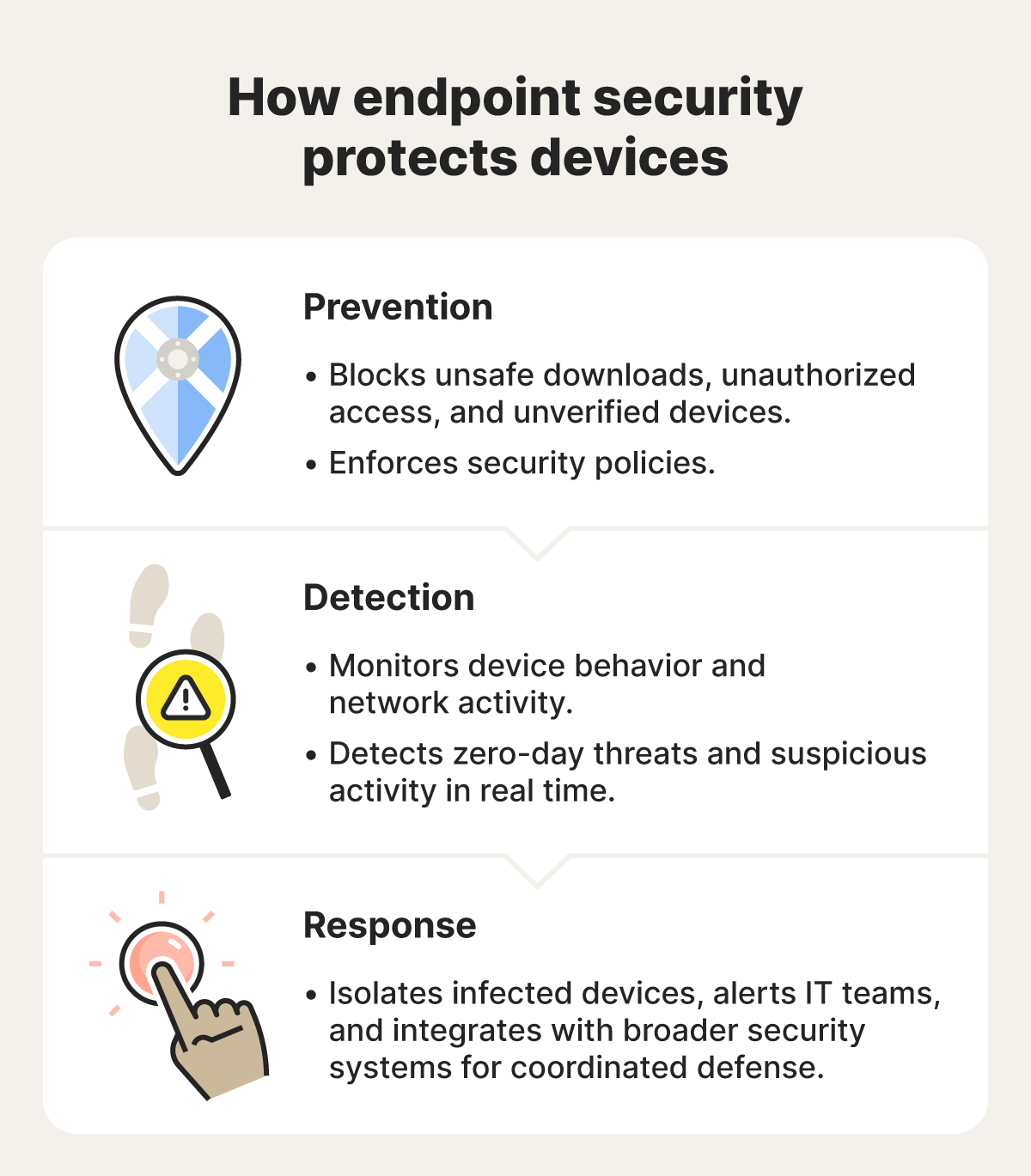
Endpoint security safeguards devices by identifying suspicious activity early and shutting it down before it can move across your network. It uses tools like firewalls, antivirus software, and real-time monitoring to block unsafe activity and keep your data secure. Here’s a closer look at how endpoint security software works.
1. Prevention
Prevention focuses on keeping threats off your devices in the first place. Endpoint security combines antivirus, firewalls, and application controls to block unsafe downloads, unverified devices, and unauthorized access. It also enforces security settings and policies across every endpoint, ensuring consistent protection across every device on your network.
2. Detection
Detection focuses on spotting threats that slip past the first lines of defense. Endpoint security uses behavioral analysis, AI, and machine learning to identify unusual activity and uncover hidden dangers like zero-day threats or fileless attacks in real time. By monitoring network traffic and user behavior, it can catch suspicious patterns early, helping prevent attacks from spreading.
3. Response
Response kicks in once a threat is detected to limit its impact. Endpoint security can automatically isolate infected devices and alert IT teams for investigation. It also integrates with broader security tools — such as endpoint detection and response (EDR) and security information and event management (SIEM) systems — to provide coordinated protection and ensure threats are contained quickly.
Key features of endpoint security software
Endpoint security software features work together to prevent attacks and respond quickly to incidents. Here are the key features that make endpoint security software effective:
- Real-time threat detection: Identifies and stops malware, ransomware, and other threats as they occur.
- Centralized management console: Provides IT teams with a single dashboard to monitor and manage all endpoints.
- Encryption and device control: Protects sensitive data on devices and controls access to prevent unauthorized use.
- Automated updates: Ensures devices always have the latest security patches and threat definitions.
- Cloud-based monitoring: Tracks endpoints across networks in real time, even for remote or mobile devices.
- Anti-virus: Scans for and removes malicious software to keep every device secure.
- Firewall protection: Blocks unauthorized access and monitors network traffic for suspicious activity.
- Data loss prevention: Prevents sensitive data from being copied, transferred, or leaked outside the network.
Benefits of endpoint security software
According to IBM’s Cost of a Data Breach Report 2025, the global average cost of a data breach is $4.4 million. By investing in endpoint security software, businesses can significantly reduce their risk of a breach, avoid costly recovery efforts, and protect their reputation. This makes endpoint security software one of the most essential IT tools for protecting business data.
Here’s a closer look at the benefits of endpoint security:
- Stronger network security: Protects every connected device, reducing the risk of breaches and unauthorized access.
- Reduced downtime: Prevents disruptions caused by malware or ransomware attacks, keeping teams productive.
- Faster response to threats: Detects and contains incidents in real time, minimizing damage and recovery time.
- Simplified IT management: Provides centralized tools that make it easier for small business IT teams to monitor and manage security across all endpoints.
- Compliance with data protection laws: Helps businesses meet security and privacy standards required by regulations like GDPR or HIPAA.
Business endpoint security software vs. consumer endpoint security software
Business and consumer endpoint security software share the same core goal: protecting devices from security threats. Both rely on antivirus tools, firewalls, and real-time monitoring to keep endpoints secure.
The key difference lies in scale and management. Business solutions provide centralized dashboards, advanced reporting, and integration with IT systems, allowing teams to protect many devices at once and enforce consistent security policies across an organization. Consumer software is designed for individual users, offering simpler interfaces and fewer administrative features.
When deciding between them, consider how many devices you need to protect and whether your team requires centralized management or advanced IT controls. Small businesses with multiple endpoints will likely benefit most from a business-focused solution.
Feature |
Business endpoint security |
Consumer endpoint security |
|---|---|---|
Device coverage |
Many devices across teams or departments |
Individual or family devices |
Management |
Centralized management console |
Managed on each device |
Reporting |
Advanced analytics and reporting tools |
Basic activity logs |
Integration |
Works with IT systems and networks |
Standalone protection |
Ease of use |
Requires IT setup and oversight |
Simple and user-friendly |
Best for |
Small to large businesses with multiple endpoints |
Individuals or households |
How endpoint security software and antivirus software work together
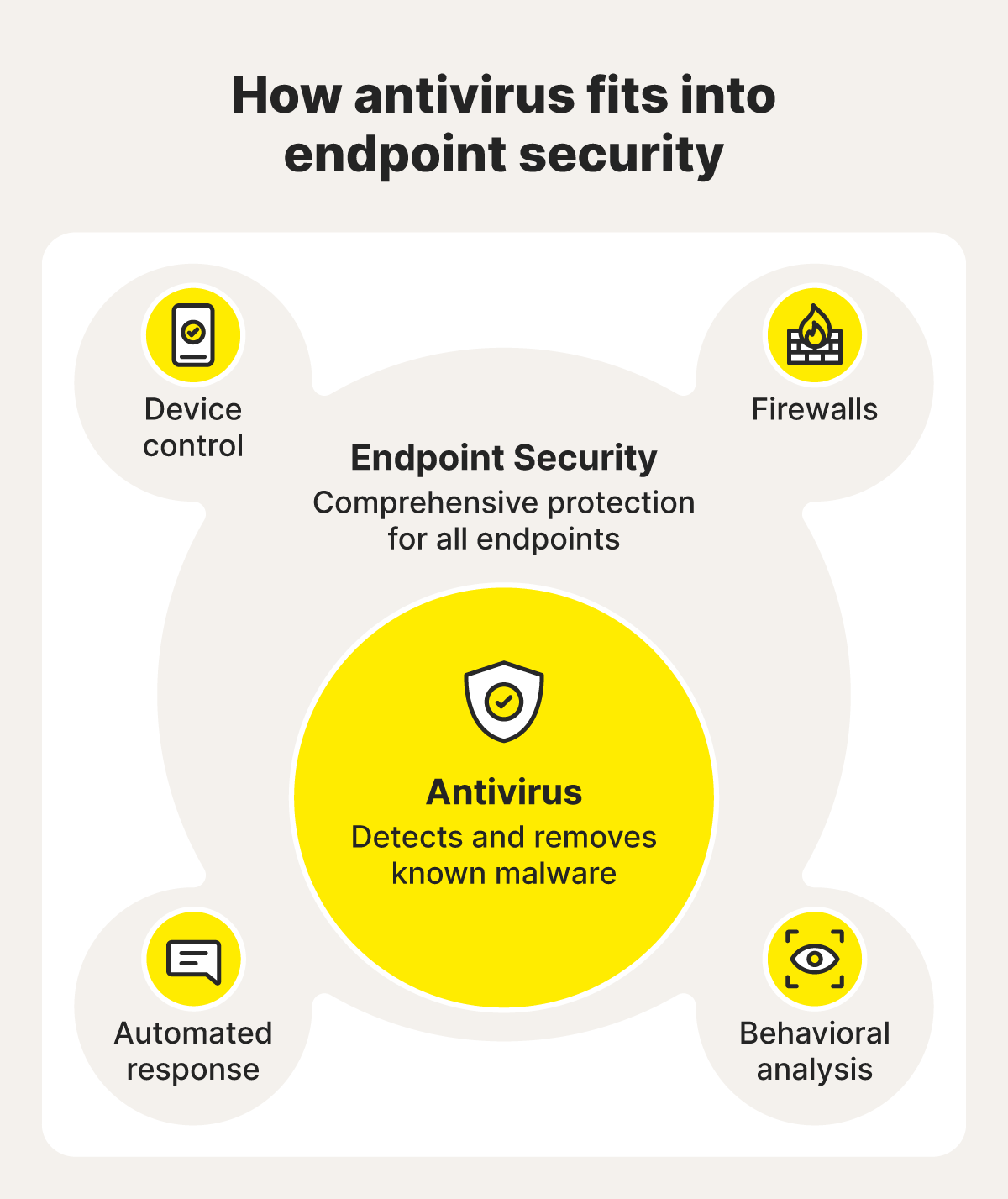
Antivirus software is one component of a broader endpoint security architecture. While antivirus primarily focuses on detecting and removing known malware, endpoint security adds deeper layers of protection, such as device control, firewalls, behavioral analysis, and automated response.
Working together, these tools defend against both familiar threats and emerging attacks, delivering more comprehensive protection across all your endpoints.
Protect your small business with Norton
Your business is only as secure as its most vulnerable device. Norton Small Business delivers powerful endpoint protection that safeguards every laptop, phone, and tablet across your network. With built-in antivirus, smart firewall defenses, and advanced threat detection working together, you get reliable, easy-to-manage security that lets you focus on running your business with confidence.
FAQs
Why is endpoint security on my computer?
Many computers come with endpoint or antivirus software preinstalled to protect users from day one. Manufacturers and IT departments include it to provide essential, out-of-the-box protection against malware, ransomware, and other online threats. In business environments, automatic installation is even more common, as IT teams deploy endpoint security to every company device to ensure consistent protection.
Is endpoint security the same as antivirus?
No, endpoint security is not the same as antivirus, though antivirus is a core part of any endpoint security package. Antivirus software focuses on detecting and removing malware from a single device. Endpoint security is a broader system that protects all devices connected to a network. It includes antivirus but also adds firewalls, threat detection, device monitoring, data protection, and automated response.
What is endpoint protection?
Endpoint protection is a cybersecurity approach that safeguards all devices connected to a network. It monitors, detects, and blocks malicious threats and unauthorized access. By combining tools like antivirus, firewalls, data encryption, and threat detection, it provides comprehensive defense for each device and helps prevent attacks from spreading across the network.
What’s the best endpoint security solution for small businesses?
Norton Small Business is a top choice for small businesses seeking endpoint protection. It protects all devices with antivirus, firewall, and real-time threat monitoring. It also includes secure cloud backup, a password manager, and 24/7 support, delivering robust protection without complicated setup.
Editors’ note: Our articles offer educational information and are written to raise awareness about important topics in Cyber Safety. Norton products and services may not protect against every type of threat, fraud, or crime we write about. For more details about how we research, write, and review our articles, see our Editorial Policy.








Want more?
Follow us for all the latest news, tips, and updates.