


What is cybersecurity and why is it important?
Learn how cybersecurity helps you protect your money, identity, personal information, and privacy.
Updated January 28, 2026


Norton launched Cyber Safety Sunday in 2023 to help shoppers protect themselves against cybercrime. Here, you’ll learn about four pillars of Cyber Safety: recognizing scams, protecting devices, securing accounts, and limiting personal data exposure. You’ll also find tips for a safer digital life — from strong passwords to securing Wi-Fi — plus a Cyber Safety Sunday quiz.

In 2023, Norton launched Cyber Safety Sunday — an annual day of action held each Sunday before Cyber Monday (the first Sunday after Thanksgiving) — to help shoppers learn about digital risks and encourage them to secure their accounts and devices before the holiday rush.
Online shopping is convenient — especially during the holidays — but cybercrime can put a damper on this festive time of year. Documented threats during past holiday shopping seasons include the 2013 Target breach, which exposed millions of in-store shoppers’ payment card details, and online shopping scams that cost victims more than $53 million in 2020 and $73 million in 2022, according to reports to the FBI.
Each new threat pushes retailers and shoppers to adapt with measures to keep themselves safer, from using strong passwords to utilizing two-factor authentication. Today, this call for increased vigilance has a dedicated date.
Cyber Safety rests on four pillars: staying alert to social engineering scams that try to trick you into handing over your information or your money, protecting your devices from malware, safeguarding your accounts with unique passwords and two-factor authentication, and limiting the exposure of your personal data.

Stay smart about scams
Malware might target your devices, but scams target you. Scammers use social engineering tricks to get you to hand over personal information or your funds, often posing as trusted organizations through phishing emails or websites, “vishing” calls, or “smishing” texts.
Be wary of unsolicited messages, even from apparent contacts. Avoid clicking on social media ads that might take you to malicious websites, and verify contact information before sharing anything. Use advanced scam protection to help stay wise to cunning scams.
To keep yourself safer from cybercrimes, you need a comprehensive approach that covers all aspects of your digital life. This is becoming particularly vital in the age of AI. AI lets scammers create convincing messages at scale, clone familiar voices, and generate fake images and videos, making fraudulent requests harder to spot.

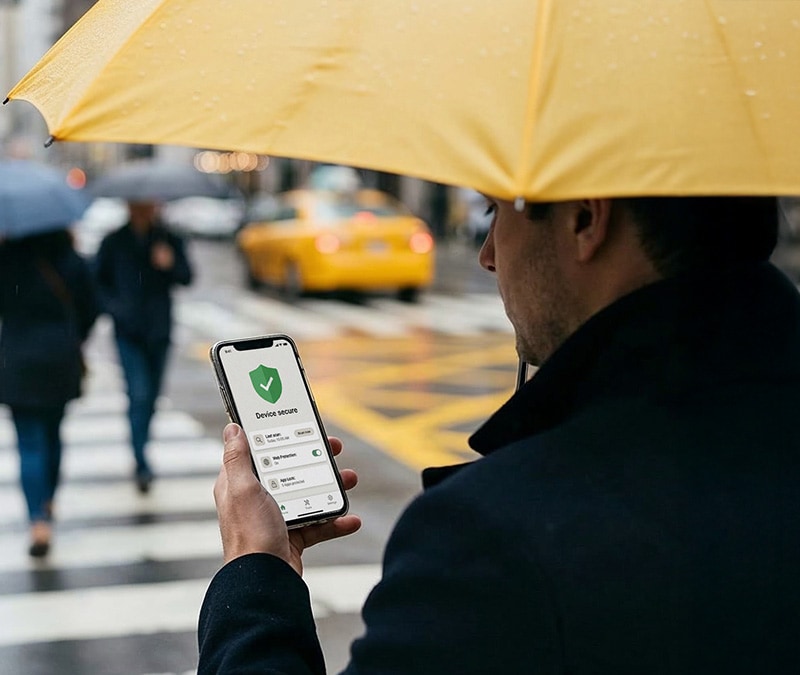

Explore the Fearless Planet Index, Gen Threat Labs’ interactive map that tracks cybersecurity risk by country using billions of signals to uncover scams and emerging threats before they make headlines. Knowing where the risks are and what they look like makes it easier to stay one step ahead, helping you to live fearlessly in a digital world.

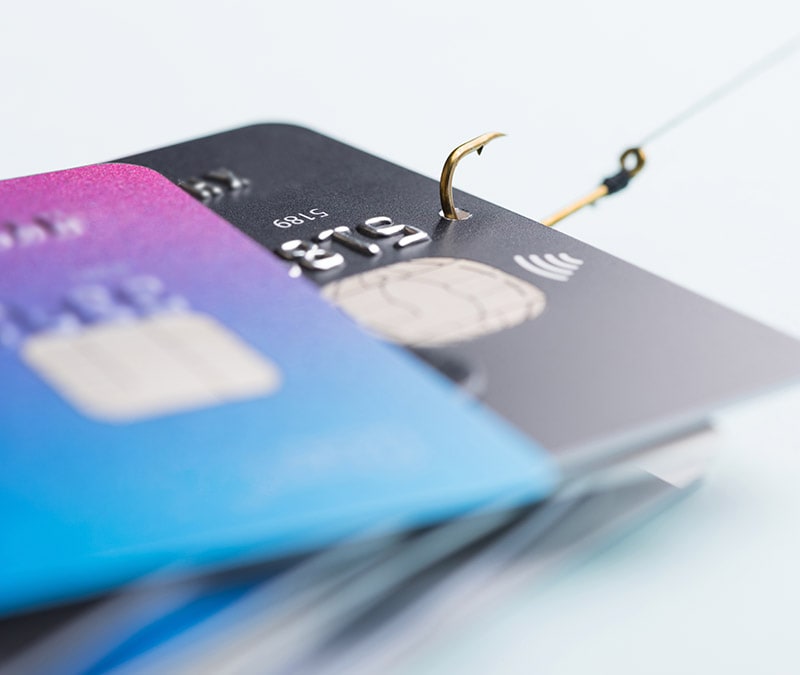
Cybercriminals rely on reused passwords, unpatched software, and convincing scam messages that exploit your personal information. Taking these steps now makes it harder for scammers to turn you into their next victim.

Every account needs its own long, unique password. A password manager can generate and store them.

Add a second login step, like a code, biometric, or security key, especially on email, banking, and social media sites.

Turn on automatic updates so patches for security flaws install promptly across devices and apps.

Be skeptical of unexpected messages that rush you or ask for personal details, and don’t click unfamiliar links.

Before posting something online, consider who will see it and whether it reveals personal information that could be used by scammers.

Change your router’s default password, avoid sensitive accounts on public Wi-Fi, and use a VPN when possible.
See how much you know about online scams and digital threats.
Question 1 of 6

A survey conducted by Gen**, the company behind Norton, found that 47% of people who were targeted by scams ended up falling for one in the 12 months before the survey.
The Gen survey** found that Gen Z reports being targeted by scams more often than any other generation.*
According to an IC3 report from the FBI, investment fraud losses topped more than $8.65 billion in 2025.*
Generic messages with poor spelling and grammar, requests that have a sense of urgency, and requests for payment via wire transfer or other methods that are hard to recover are all signs of a potential scam.
Phishing is a general term for a fake message that tricks you into disclosing personal data — especially over email. Smishing scams happen over text messages, while vishing (voice phishing) scams involve phone calls, robocalls, or voicemails. Bishing is not a type of scam.
Signs of popular holiday scams include offers of incredibly low prices on in-demand holiday items, communications from well-known retailers with deals and discounts that seem off, being asked to pay for items with gift cards or through wire transfer, and being asked for donations when it’s unclear where the money is going.
Better luck next time!
It seems you still have a lot to learn about Cyber Safety.
Good attempt!
It seems you still have a lot to learn about Cyber Safety.
Good attempt!
You’re on the right track, but you still have more to learn about Cyber Safety.
Nice job!
You have a strong understanding of Cyber Safety fundamentals — but there’s more to learn.
Nice job!
You have a strong understanding of Cyber Safety fundamentals.
Nice job!
You have a strong understanding of Cyber Safety fundamentals.
Amazing!
You really do know a lot about Cyber Safety.
Learn more about how to stay safer online and help protect your digital privacy.
*Federal Bureau of Investigation, Internet Crime Complaint Center's 2025 internet crime report.
**The study was conducted online within the United States from 22 May 2026 to 9 June 2026, among 1,000 adults ages 18 and older. Data are weighted where necessary by age, gender, and region, to be nationally representative.
***Gen (the company behind Norton) commissioned Dynata to conduct a study online of 11,006 adults ages 18 and older within the United States, United Kingdom, France, Brazil, Germany, Australia, New Zealand, the Czech Republic, Italy, Japan, and Mexico from 24th April to 9th May 2025 among. Data are weighted where necessary by age, gender, and region, to be nationally representative.



Norton
360 Deluxe










Want more?
Follow us for all the latest news, tips, and updates.