



How to tell if your phone camera is hacked (11 signs)
Noticed strange camera behavior, mystery apps with camera permissions, or your phone overheating for no reason? These could be signs of camhacking. Learn how to tell if your phone camera has been hacked and how mobile security software can help alert you to threats and put you back in control of your device.

2025
Approved
Anti-Phishing

2025
Top Rated Product



- 1. Monitor your camera's light indicator
- 2. Check your data usage
- 3. Investigate your camera’s behavior
- 4. Review the camera permissions of individual apps
- 5. Monitor your video call performance
- 6. Listen for strange sounds in calls
- 7. Review your location permissions
- 8. Look for newly added photos or video files
- 9. Assess your battery performance
- 10. Check to see if your device is warmer than usual
- 11. Run a malware scan
- What you should do if your phone camera is hacked
- How to protect your phone camera from hackers
- Help protect your phone camera from prying eyes with Norton 360 Deluxe
- FAQs
Believe it or not, hackers using spyware or remote-access Trojan malware might be able to turn your mobile camera on and off, record videos, and even save media from your camera roll. Although modern smartphones come with enhanced security measures designed to prevent camhacking, there are still workarounds that hackers can, and have, exploited.
For example, in October 2025, security researchers demonstrated how the Samsung Galaxy S25 and S25 Ultra could be hacked using a previously unknown software vulnerability. The exploit allowed attackers to take control of a phone remotely, turn on the camera, and track device location, all without the user clicking or approving anything.
Samsung later addressed the issue through security updates, but the incident underscored the very real risk of mobile spying. In this article, we cover 11 signs your phone camera may have been hacked, what to do if it happens, and how to protect yourself against future attacks.
1. Monitor your camera's light indicator
Most phones have an LED or on-screen light indicator that alerts you when the camera is in use. If your phone has been hacked and someone is watching you through the camera, this light may remain on even when you’re not using camera-enabled apps, or turn on and off unexpectedly.
The LED indicator works differently on iOS and Android devices:
- iPhones display a green indicator when the camera is active and an orange indicator when the microphone is in use.
- Android devices typically show the same green dot for camera and mic use, though this may differ on some devices.
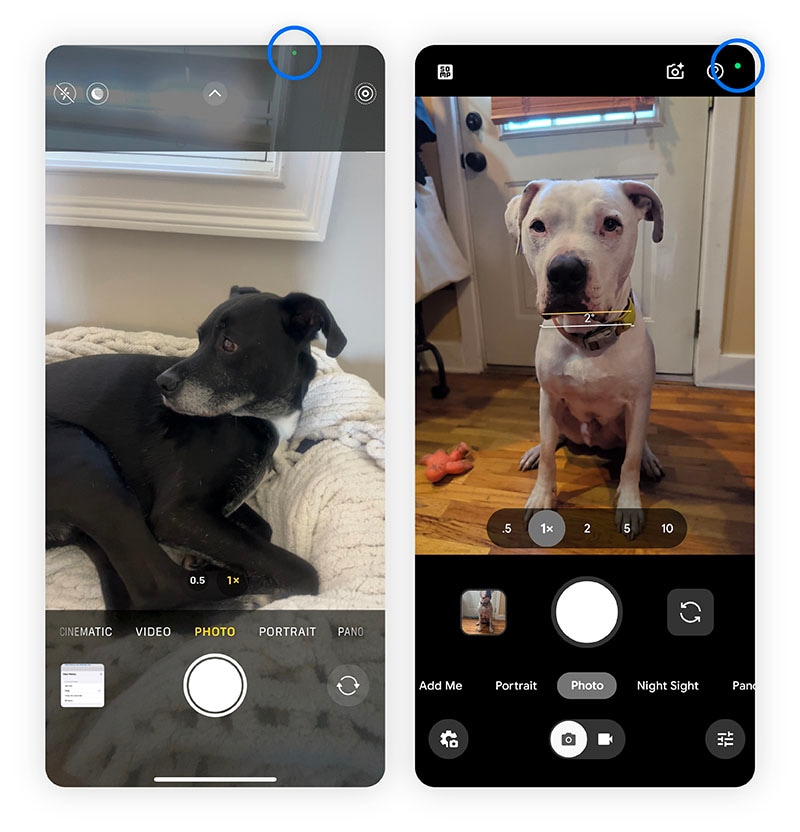
The camera light indicator turning on when you’re not using the camera can also result from faulty firmware (the microcode that controls device hardware) or an app you forgot to close. Even so, if you notice this behavior, it’s wise to scan your phone with antivirus software or have a professional assess the device.
2. Check your data usage
Apps running in the background use data to continue syncing information when not in use, allowing them to deliver up-to-the-minute news, weather, and social media updates. But malicious apps can also run in the background, and a sudden, unexpected jump in cellular or Wi-Fi data usage can be one of the first signs that something is secretly recording from your phone camera.
These malicious programs are often delivered via scareware or phishing attacks. And, once in place, they could give the hacker access to more than just your camera — also potentially allowing them to continuously monitor everything you type and other activity. But to get the recorded data back to a device they control, they’ll have to piggyback on your internet connection, leaving evidence in their wake.
Here’s how you can use data usage metrics to get clues about whether someone has hacked your phone camera:
- On iPhone: Open Settings and tap Cellular (or Mobile Service) to see how much cellular data each app is using. You can’t check Wi-Fi data usage by app on iOS.
- On Android: Go to Settings, then Network & Internet, search “data usage,” and tap App data usage or Non-operator data usage to check data usage by app for your cellular data and Wi-Fi, respectively.
If you spot an app you don’t recognize using up data, or one you do recognize using a surprising amount of data, investigate, consider deleting it, and run a mobile security scan to check for malware. Pay particular attention to apps that use data even when your phone is idle, which might be capturing or transmitting data in the background.
3. Investigate your camera’s behavior
If you notice your phone camera turning on by itself, saving photos or videos you didn’t take, or causing your phone to slow down or crash, take the time to investigate. These kinds of issues can occur when malicious software interferes with your camera in the background or attempts to access it without your permission.
If you use any third-party camera apps, double-check their legitimacy and consider removing them from your device. Some lesser-known apps may not be trustworthy, and they could even be malware that introduces vulnerabilities and allows hackers to quietly access your camera.
This risk isn’t limited to dedicated camera apps, either. Any suspicious third-party app that requests camera or microphone permissions could offer hackers a backdoor into your system, compromising your privacy.
4. Review the camera permissions of individual apps
Permissions give you control over what apps can access your phone’s camera or other hardware components. Reviewing permissions in your Settings app can help you spot anything suspicious. Look out for apps with camera permissions that you don’t recognize, no longer use or that shouldn’t require your camera.
For example, an app that includes video conferencing, QR code scanning, or photo-taking functionality will probably need camera permissions. But finance apps or games probably won’t.
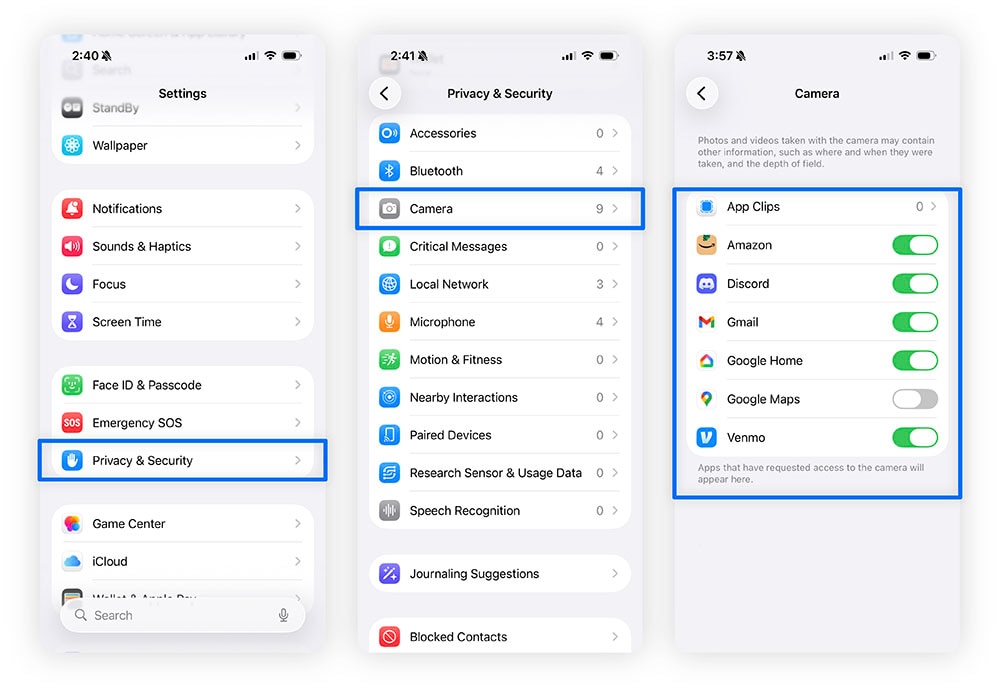
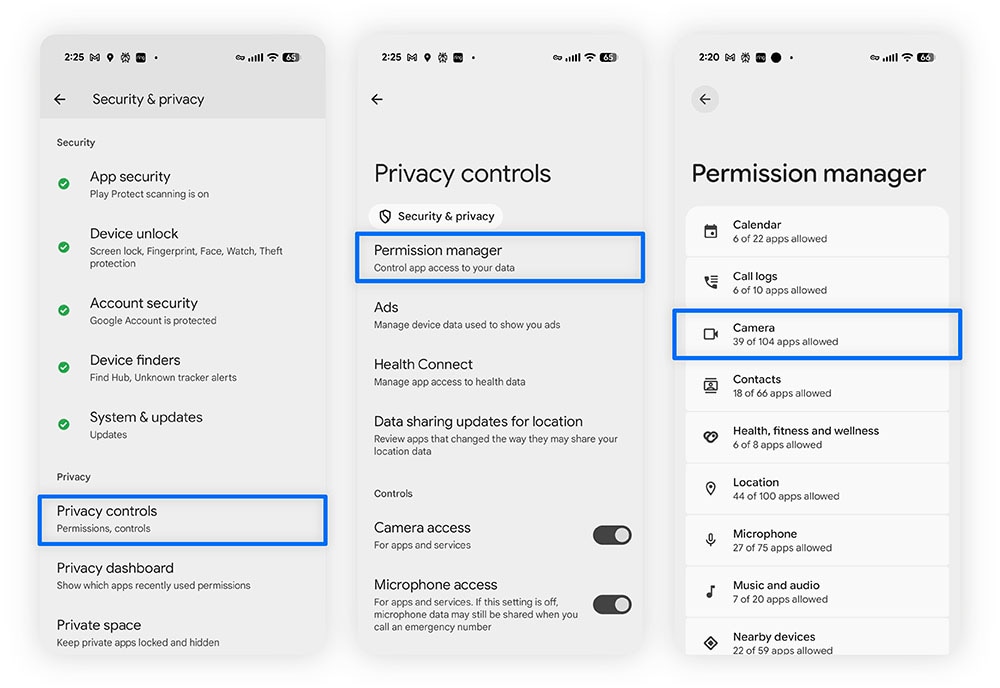
Here’s how you can review which apps have camera access:
- On iPhone: Go to Settings > Privacy & Security > Camera to review which apps can access your camera.
- On Android: Go to Settings > Security & privacy > Privacy controls > Permission manager > Camera to see all apps with camera access.
To minimize your risk of becoming vulnerable to camera hackers in the future, check what permissions an app requires before downloading it and aim to only grant camera access when necessary.
5. Monitor your video call performance
Low-quality video performance when video calling somebody can be a sign that someone is intercepting the data, especially if the issues seem to appear out of nowhere, and your internet speed is otherwise fine.
To troubleshoot this risk, start by ruling out other potential causes of poor performance such as a bad Wi-Fi connection, slow internet, or malfunctioning hardware. If none of these seem likely to be the cause, run a security scan to check for viruses on your phone.
6. Listen for strange sounds in calls
Clicking, static, echoes, or shutter-like noises during calls can be signs that something else is accessing your phone’s microphone, audio feed, or camera. These sounds may appear on voice or video calls, even when your internet connection is stable.
Most of the time, they’re likely to be caused by an innocent glitch. But, in some cases, they could signal that your phone is tapped with malicious software used to intercept or record audio in the background, allowing a third party to listen in without your knowledge.
7. Review your location permissions
Like camera permissions, location permissions let apps track a phone’s movement — powering tools like maps and ride-sharing apps. But they also affect camera privacy. When an app has access to both your camera and your location, it can attach location metadata to photos, revealing where they were taken.
That information can be risky. It may allow cyberstalkers or hackers to connect camera activity to real-world locations and monitor your movements. If someone gains access to your camera roll, they could see where photos were taken, and, by extension, where you’ve been.
Review location permissions in your privacy settings and remove access from apps that don’t need it. While you’re there, consider limiting location access to “only while in use” to reduce unnecessary tracking.
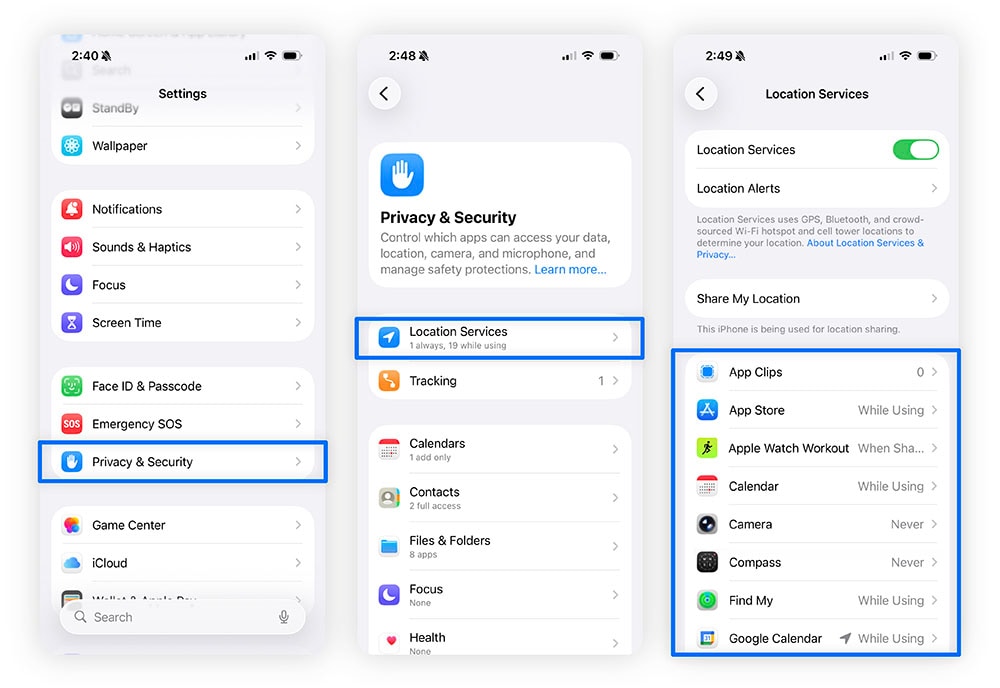
You can access your iPhone’s location settings by navigating to Settings > Privacy & Security > Location Services. Check the list of apps that have access to location data and make changes to suit your privacy needs.
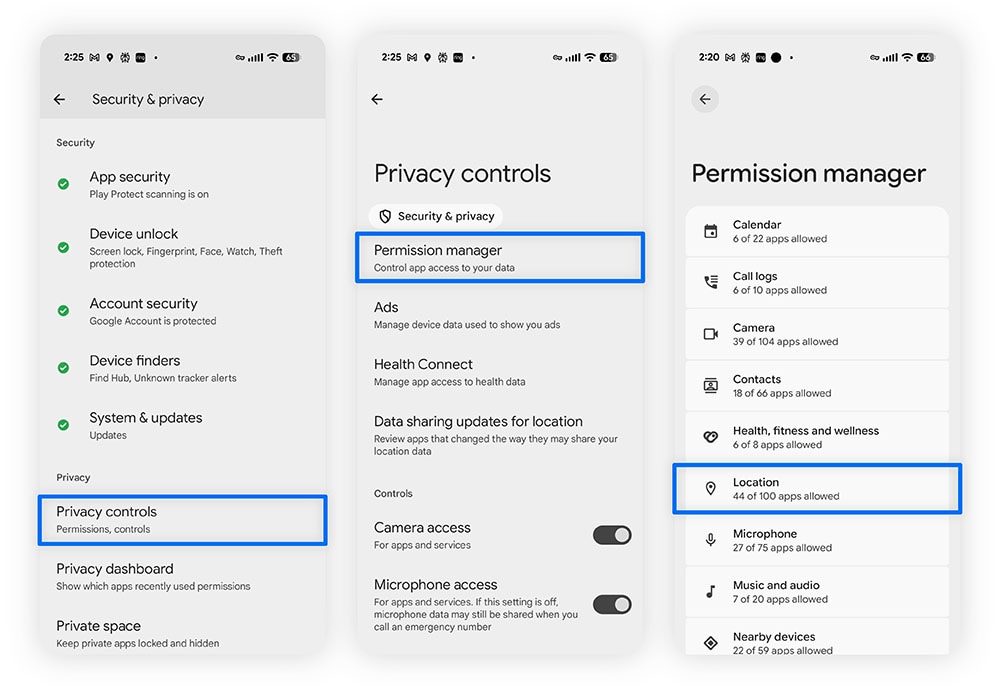
On Android, go to Settings > Privacy controls > Permissions manager > and Location. From there, review the app list and disable access for any apps that don’t need location data.
8. Look for newly added photos or video files
While sophisticated spyware will be able to hide illegally captured photos or videos from you, low-tech malware might slip up. So, if you notice new photos or videos that you didn’t take in your camera roll, treat it as a warning sign and run a security scan to check for malware.
You might also notice your phone suddenly slowing down as your storage fills up with media captured by a hacker. If your device storage seems to be decreasing rapidly for no apparent reason, it could be a sign that your phone is hacked.
9. Assess your battery performance
If your phone camera is being accessed in the background, it will likely result in increased battery usage as photos or videos are captured and stored. A fast-draining battery — especially if you’re not actively using your phone — can be a sign that camera-related spyware is running in the background.
However, bear in mind that there are lots of other reasons your battery might be draining faster than usual, from spotty cell signal to hardware damage. This sign should only be cause for concern if it’s combined with others on this list, like suspicious camera behavior.
10. Check to see if your device is warmer than usual
An unusually hot phone can be a sign that the camera or other sensors are running in the background without your knowledge. Camera-hacking spyware often stays active even when you’re not aware of it, and the battery drain from hidden recording can cause your device to overheat, even while idle.
If typical explanations like sun exposure, high screen brightness, or a faulty charger don’t apply, it’s worth considering whether camera-hacking malware could be the cause.
11. Run a malware scan
Malware scans can help you detect spyware, remote-access Trojans, and other malicious programs or files in real time. If you find spyware through a scan, you can then use a spyware removal tool to get rid of it and restore your privacy.
Many Android devices include built-in security features that can scan apps for harmful behavior, while iOS relies on strict app controls and system protections to reduce the risk of malware in the first place.
For added protection, you can install a mobile security app like Norton 360 Deluxe, which offers features such as malicious app detection, proactive alerts when new risks are identified, and online protection tools designed to help keep you safer as you browse.
What you should do if your phone camera is hacked
If you believe your phone camera has been hacked, acting quickly can help limit the severity of the intrusion and protect more of your personal data from being exposed. Follow these steps to quickly identify the threat, remove it, secure your phone, and protect against fraud.
- Get offline: Turn on Airplane Mode to cut off Wi-Fi and cellular connections, which can stop remote access and prevent captured data from being transmitted.
- Cover the camera: Place a cam cover over the camera lens to block visibility until you’ve resolved the issue, especially if your camera indicator light keeps appearing unexpectedly.
- Run a malware or spyware scan: Use reputable mobile security software to detect and remove malicious apps or hidden spyware that may be accessing your camera.
- Uninstall suspicious apps: Remove any other apps you don’t recognize, no longer use, or that request unnecessary camera access to reduce the risk of keeping an app that might be compromised with malware.
- Review app permissions: Check through your remaining apps looking for any that have camera access and revoke permissions for any that clearly don’t need it.
- Update your operating system: Install the latest OS updates to patch security vulnerabilities that attackers may exploit. Also update any individual apps that are out of date.
- Inform your contacts: Let friends and family know your phone may have been compromised so they can watch for unusual messages or links that might be part of follow-up scams.
- Notify financial institutions and authorities: If any financial or sensitive data may have been compromised, contact your bank immediately to report the risk of fraud. Monitor your accounts closely for unauthorized activity, and consider placing a fraud alert or freezing your credit report to help reduce the risk of identity theft.
- Factory reset as a last resort: If suspicious activity continues, consider resetting your phone to factory settings. Remember, this will permanently delete anything you’ve got stored on your phone, so make sure to back up any essential data beforehand.
How to protect your phone camera from hackers
Protecting your phone camera starts with reducing the ways attackers can gain access in the first place. Taking a proactive approach can help block spyware, limit unauthorized camera access, and prevent hidden monitoring.
- Know the warning signs: Pay attention to things like indicator lights turning on for no reason, unexplained photos or videos in your camera roll, or sudden battery drain. Catching an issue early can help you remove the spyware before your privacy is seriously impacted.
- Review app permissions regularly: Check which apps have access to your camera and remove permissions for anything that doesn’t clearly need it.
- Don’t jailbreak your phone: Avoid apps that require you to jailbreak your iPhone or root your Android device. This process weakens your phone's security, potentially allowing malicious apps to gain complete control over your camera and other sensitive functions.
- Avoid suspicious links and attachments: Be cautious with suspicious links and attachments you encounter on the web, in emails, or on social media. Clicking a malicious link or downloading an infected file can accidentally install spyware on your device.
- Strengthen your privacy settings: Protect your privacy by limiting app permissions, using strong passwords, and enabling two-factor authentication on any sensitive accounts that offer it.
- Be cautious of third-party apps: Only download apps from trusted, first-party sources such as the Apple App Store, Google Play Store, or the official website of a company you trust. Unofficial third-party app stores often lack the same security standards, making it easier for hackers to hide spyware inside apps.
- Use a VPN: A VPN encrypts your internet traffic, making it harder for attackers on public or unsecured Wi-Fi networks to intercept data or secretly install spyware on your device.
- Use mobile antivirus software: Safeguard your phone with reputable antivirus software to beef up your built-in security, catch malware as it’s detected, and help prevent camera hacking incidents.
Help protect your phone camera from prying eyes with Norton 360 Deluxe
Taking steps to keep your phone camera secure helps protect your privacy, prevent unauthorized monitoring, and reduce the risk of your personal data being used for serious crimes, such as financial fraud or sextortion.
Norton 360 Deluxe can make the task easier, with a range of features that can help you detect and block spyware, scan apps for malicious behavior, and get alerts of potentially unsafe links before you click them. Get powerful mobile security today to boost your online privacy and security.
FAQs
How can spyware control your phone’s camera?
Some mobile spyware can control your phone’s camera by abusing the same system features legitimate apps use — usually by tricking you into granting camera permissions. Once approved, attackers can spy on whatever the camera sees and may also gain access to your microphone, location, calendar, and contacts.
Can your phone's microphone be hacked?
Yes, if an attacker gains access to your phone’s camera, they may also be able to access the microphone. If you notice suspicious apps or believe your device may be compromised, run a reputable antivirus scan to detect hidden malware or Trojan viruses.
Can someone hack to see me through my camera?
Yes, it’s possible for someone to spy on you through your phone’s camera — a tactic known as camfecting. This typically occurs when malicious software, such as a remote-access Trojan, is installed through phishing emails, malicious links, or fake apps.
Can websites access your phone camera?
Most modern mobile browsers block camera access by default and require your explicit permission. For example, video chat or web-based conferencing sites will prompt you to approve camera access before using it. If you tap “Allow,” the site can access your camera for that session.
Editors' note: Our articles offer educational information and are written to raise awareness about important topics in Cyber Safety. Norton products and services may not protect against every type of threat, fraud, or crime we write about. For more details about how we research, write, and review our articles, see our Editorial Policy.








Want more?
Follow us for all the latest news, tips, and updates.