






Tax scam statistics to know this filing season
Survey research commissioned by Gen,* the company behind Norton, highlights the scale of the tax scam problem: 17% of U.S. respondents reported encountering a tax scam in 2025. Below are some sobering tax scam stats that reveal how these scams are unfolding, who they affect, and what steps you can take to help protect your personal information.
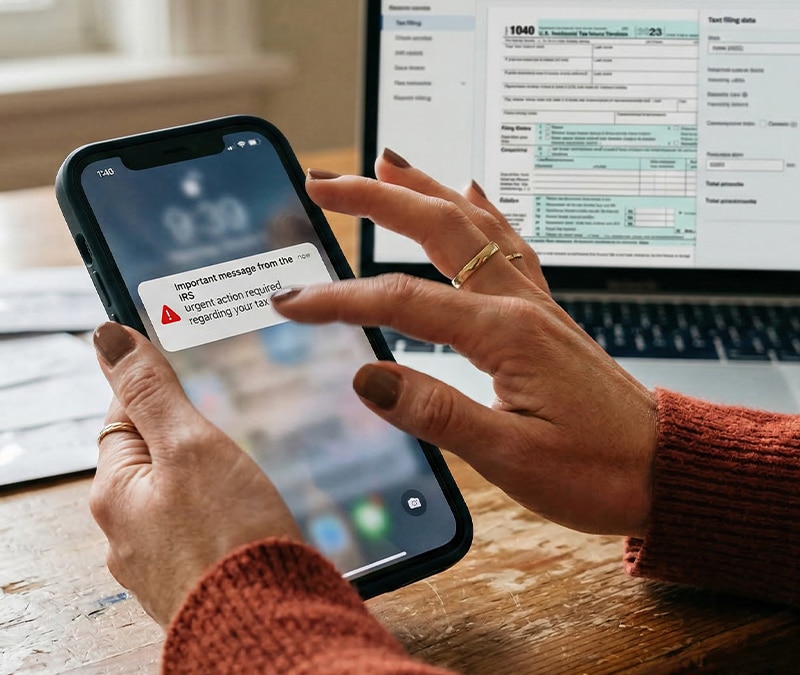

Tax season is an exasperating time for many Americans. With deadlines looming, documents piling up, and financial pressure running high, stress levels can spike. And, unfortunately, IRS scammers are taking advantage of the chaos. Threat actors are using AI to mount more realistic phishing campaigns, create fake tax filing apps or websites, steal sensitive information, and commit tax fraud and identity theft.
To shed light on the tax scam risks facing Americans, Norton analyzed newly commissioned survey data from Gen Digital. The study explores common tax scams, filing plans, and the growing role of AI in tax season. Below are some highlights.
12 key tax scam statistics
- 17% of U.S. respondents encountered a tax-related scam. This includes fake IRS calls, phishing emails, refund fraud, and fraudulent tax preparers.
- More than 1 in 3 people who said they encountered a tax scam fell victim (35%). That means 6% of all U.S. adults surveyed fell for a tax-related scam.
- The average reported loss per tax scam victim is $8,401. The highest reported loss reached $75,000, underscoring how expensive tax fraud can be for victims.
- The most commonly reported tax scam is IRS impersonation (32%). Respondents described fake calls, texts, or phishing emails demanding payment or personal information from someone posing as the IRS.
- Of survey respondents who encountered a scam, 29% received a fraudulent call (otherwise known as a vishing call) demanding payment or sensitive information.
- Not all tax scams involve IRS impersonation. Many respondents encountered tax-related phishing messages that weren’t from the IRS — either via SMS phishing texts (28% of those who encountered a scam) or phishing emails (26%).
- A worrying 23% of those who reported a tax scam attempt said it related to identity theft involving their Social Security number. If a fraudster gets hold of your SSN and steals your identity, they can file a tax return in your name and steal your refund, open new credit accounts, or fraudulently claim government benefits.
- 22% of those who encountered a tax scam said someone had attempted to steal their tax refund or file a tax return in their name.
- Of those who encountered a tax scam, 18% reported fake tax filing apps or mobile tools. Fake apps can be used to charge you for bogus services or steal sensitive personal information in order to commit identity theft.
- Similarly, 23% of those who encountered a scam said they’d encountered a fake tax filing website. Using AI tools, fraudsters can build malicious websites designed to steal personal information. Known as “VibeScams” because they look and feel so real, these sites can be created with very little effort or technical expertise.
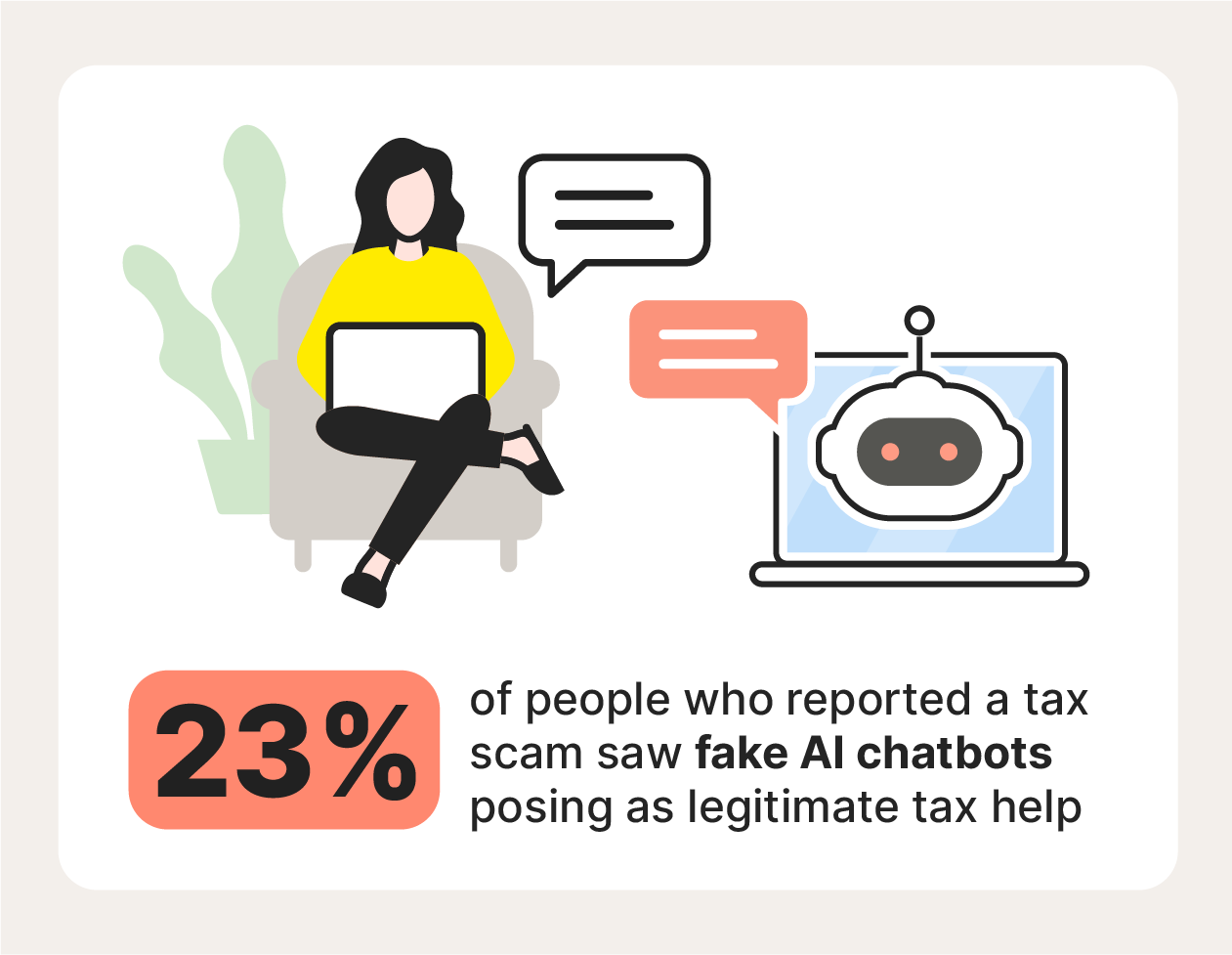
- AI-related tax scams are an emerging threat. 23% of people who said they encountered a tax scam reported fake AI chatbots posing as legitimate tax help, and 21% were served fake links generated by AI chatbot or search engine summaries.
- 17% of those who saw a scam said they had encountered fraudulent tax preparers. The IRS warns of “ghost tax preparers” — unauthorized or unethical preparers who refuse to sign your return or provide their IRS Preparer Tax Identification Number (PTIN).
AI: A new vector for tax scams
As free government tax filing services disappear, malicious AI tools are emerging as a new vector for scams. With the IRS Direct File program ending in 2025, many taxpayers who relied on the government’s free filing option may need to look for alternative ways to prepare and submit their returns.
More than a quarter (27%) of Gen survey respondents said they intend to switch to a different free filing service, while others plan to seek advice from third-party software (48%), search engines (33%), and social media, which poses its own risks (24%).
Notably, 23% of U.S. adults surveyed said they plan to use AI tools to help file their taxes. Of this group, 41% said they would be comfortable with AI filing their taxes for them. AI can be a powerful assistant, and platforms like ChatGPT and Copilot can be helpful in explaining tax terms and recommending forms.
However, since AI is such a new technology, the general public may not always understand its risks and limitations. AI tools can make tax preparation more accessible, but they also create new opportunities for scammers.
AI agents are particularly risky: innovative tools like OpenClaw pose a significant threat if consumers unwittingly install a malicious agent claiming to be a tax helper that’s actually programmed to exfiltrate sensitive data, potentially exposing them to identity theft.
And, as the survey data in the section above underscores, scammers are already leveraging AI to create fake tax filing apps, websites, and chatbots designed to redirect users to malicious websites, steal personal information, or simply charge consumers for bogus services.
Stay safer from tax scams
As tax filing methods evolve and scammers adopt more sophisticated tactics, taking a few proactive steps can help reduce your risk. Whether you’re using traditional tax software or experimenting with AI agents, verifying sources and protecting your personal information is critical.
- Use verified tax services: Confirm your preparer has a valid PTIN and only access tax software through official websites.
- Don’t trust unsolicited messages: The IRS does not make unsolicited contact with taxpayers by email, text, or social media without first sending a mailed letter. If you receive a tax-related message, verify it independently using official contact information from the IRS website.
- Use AI tools carefully: Stick to reputable platforms, avoid clicking unknown links generated by chatbots or search summaries, and avoid giving excessive access or permissions away to unvetted AI agents.
- Protect sensitive information: Do not share your Social Security number or financial details unless you’ve confirmed the recipient’s identity, can verify that they’re trustworthy, and know that they absolutely need your SSN.
- Monitor your accounts: Check your bank, credit card, and credit reports regularly for suspicious activity. If you notice something fishy, contact the relevant financial institution.
- Report tax scams quickly: Notify the IRS and the FTC if you suspect tax fraud. While these organizations may not be able to recover lost money, reporting a tax scam can help authorities investigate the fraud and prevent others from becoming victims.
Consider AI-powered protection for AI-powered tax scams
Scammers are using AI to create more convincing phishing messages, fake websites, and fraudulent apps, but AI-first security tools can help counter those threats.
Norton 360 Deluxe helps protect against malicious websites and unsafe downloads, flags suspicious links, and includes an AI assistant that can help you detect scam messages. With layered defenses designed to defend against emerging threats, it can help reduce your exposure to tax-related scams before financial damage occurs.
Survey methodology
*The study was conducted online within the United States by Dynata on behalf of Gen Digital (Norton’s parent company) in November 2025 among 1,000 adults ages 18 and older. Data is weighted where necessary by age, gender, and region to be nationally representative.
Editors’ note: Our articles offer educational information and are written to raise awareness about important topics in Cyber Safety. Norton products and services may not protect against every type of threat, fraud, or crime we write about. For more details about how we research, write, and review our articles, see our Editorial Policy.








Want more?
Follow us for all the latest news, tips, and updates.