


Privacy
How to Keep Your Online Activity and Identity Private
Today, your continuously connected lives are leaving behind a trail of data from your electronic devices. From the apps on your smartphones, your browser history on your computer, to the data on your fitness tracking device- anything that is connected to the Internet is storing information.
What Information is Okay to Share Online?
While all this abundance of information sharing may seem alarming, there are good reasons for it. It’s very natural to hit the “accept” popup when your device asks for allowing Cookies, location services, or to access other features of your device to be used by certain Apps or programs. We often do this without thinking of the privacy ramifications. Companies actually need to track certain information in order for their products to work. Therefore, these technologies help facilitate GPS directions, localized search results to find a nearby restaurant, and help improve the targeting of ads.
Remember- you are in control of what information you share abut yourself online. Research privacy policies and block access to suspicious requests from Apps or programs. If you have social media accounts, be sure to check those privacy settings too.
Risks to Privacy with Connected Devices
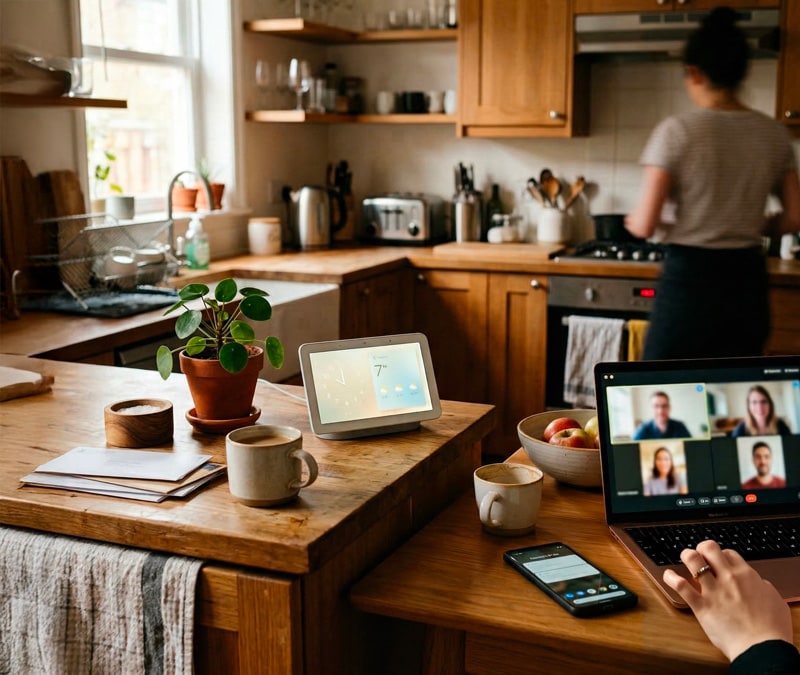
The downside to this information sharing is that there are also ways in which your privacy can be compromised, illegally or unintentionally. Unfortunately, some companies do not think of security first and focus on the functionality of their product primarily. With the emerging Internet of Things, most of the new gadgets we bring into our homes now have the ability to connect to Wi-Fi. This means Internet connected devices such as streaming security cameras, light bulbs, thermostats and smart home products all have computers in them that store data. Most all of these technologies have security issues, such as default passwords left unchanged once installed, to unsecured routers protecting these devices. As a result, cybercriminals with nefarious intent can bypass the poor security included in these devices. The key to protecting your privacy is learning how to properly setup and secure all of your connected devices.
-
What is identity management and why does it matter? — plus 7 tips
Read MoreIdentity management involves protecting your personal information tied to your online activities. Here’s how to make it work for you.
-
How data brokers find and sell your personal info
Read MoreData brokers gather and sell information about you. Here’s how to gain some control over your data.
-
The privacy paradox: How much privacy are we willing to give up online?
Read MoreA definition of the privacy paradox, stats suggesting it became a bigger problem during the COVID-19 pandemic, and tips to protect our internet privacy on everyday platforms.
-
Internet tracking: How and why we’re followed online
Read MoreHere’s a look at what a VPN kill switch is, how it works, types of VPN kill switches, causes of VPN disconnections, and how a VPN kill switch can help protect you.
-
Be Cyber Smart: A guide to help you do your part
Read MoreGetting cyber smart starts with cyber hygiene. Here are tips and strategies to help keep you and your family Cyber Safe.
-
Blockchain security: How safe blockchain really is
Read MoreHow safe is blockchain technology? Here, we overview the term, plus blockchain security threats and best practices to avoid them.
-
VPN kill switch: What is it and how does it work?
Read MoreHere’s a look at what a VPN kill switch is, how it works, types of VPN kill switches, causes of VPN disconnections, and how a VPN kill switch can help protect you.
-
Does the Do Not Call Registry work?
Read MoreDon’t expect the Do Not Call Registry to shield you from every unwanted call. Here’s why.
-
Are password managers secure?
Read MorePassword managers offer encrypted solutions for creating and storing strong passwords that help keep your data more secure.
-
Are VPNs legal or illegal?
Read MoreSome VPNs encrypt your connection to the internet, disguise your IP address, and prevent others, like the government or internet service providers (ISPs), from tracking your virtual whereabouts. There are plenty of legitimate reasons to want this degree of privacy, but you should understand what’s considered legal and illegal while using a VPN.
-
Why your online privacy matters
Read MoreWe all have things to hide. It could be how much money we make, our medical records or bank account numbers. Here are twelve tips to help you protect your privacy online.
-
Does a VPN use data? Short answer? Yes
Read MoreUsing a VPN will count against the data limits on your smartphones or tablets. But VPNs offer many benefits.
-
What is a data breach?
Read MoreData breaches are security incidents where information is accessed, stolen, and used by a cybercriminal without authorization. Data breaches impact individuals and organizations every day. Learn how a data breach occurs and how to protect your personal information.
-
Tips for protecting your social media privacy
Read MoreSocial media sites such as Facebook, Twitter, Instagram, and Snapchat have become digital billboards for internet users. People love sharing their personal views and news about what’s going on in their lives. But stop and think for a moment: some of this information is going up on the internet. Outside of your trusted circle of friends and relatives, who else is viewing what you post? Spam bots, vindictive acquaintances, and even cybercriminals could take an interest, too.
-
VPN tests: How to check if your VPN is working properly
Read MoreA VPN leak can make you IP address visible to others. Learn how to test whether your VPN has a leak.
-
Setting up a VPN on your router
Read MoreConnecting to the internet through a VPN provides greater privacy and anonymity. Learn how to set up a VPN on your router at home.
-
Here's the reason why people cover their webcam
Read MoreCan cybercriminals spy on you through your webcam? Here’s why you should cover it up.
-
What is a digital footprint? And how to help protect it from prying eyes
Read MoreYour digital footprint includes all traces of your online activity. This includes your IP address, your login details, and other personal information. Information that is posted about you also gets added to your data trail. It could show up when someone searches for your name online. Your online identity can influence different aspects of your life.
-
Is personal data really gone when it is deleted?
Read MoreEver wonder what happens when you drag old emails into the trash or delete personal records to free up space on a hard drive? You might be surprised to learn that your data may not really be gone.
-
Sensitive data exposure: What is it and how it’s different from a data breach
Read MoreYour personal information can be exposed in different ways. Sensitive data exposure is one way. A data breach is another.
-
The risks of public Wi-Fi
Read MorePublic Wi-Fi allows you to access the Internet for free. There are a tremendous number of risks that go along with these networks. Business owners may believe they’re providing a valuable service to their customers, but chances are the security on these networks is lax or nonexistent.
-
How secure is a VPN? What makes a safe VPN?
Read MoreVPNs protect your public internet connection by encrypting your information and shielding your online activity from cybercriminals and even your own Internet Service Provider, or ISP. The most secure VPNs are likely transparent about their privacy policies, take steps to fix leaks, and won’t keep logs of your browsing history.
-
The ultimate guide to online dating
Read MoreOnline dating is as normal to life as is online shopping. Believe it or not, online dating has been around for 20 years, and as a result, cybercriminals are finding big money in people looking for love.
-
Cloud Security: How Secure is Cloud Data?
Read MoreThe positives of storing data and files in the cloud are many, but you may have questions about security. Find answers here.
-
Are free VPNs safe? 7 things to know before using free VPNs
Read MoreYou might be tempted to sign up for a free VPN service. But are free VPNs safe to use? Learn more.
-
Is hotel Wi-Fi safe? Staying secure on public Wi-Fi
Read MoreLearn how-to tips for using public Wi-Fi safely at the Wi-Fi network at your airport, cafe Wi-Fi networks, and hotel Wi-Fi networks.
-
What is private browsing? How to use it on any browser
Read MoreMajor web browsers offer private browsing or incognito modes. But what does “private” really mean? Find out here.
-
Proxy vs. VPN: 4 differences you should know
Read MoreA proxy server and virtual private network can both help protect your online privacy — but there are big differences. Learn more.
-
Privacy vs. security: What’s the difference?
Read MorePrivacy relates to any rights you have to control your personal information. Security refers to how your personal information is protected. Some people regard privacy and security as pretty much the same thing, but they aren’t the same, and knowing how they differ may help you to protect yourself in an increasingly connected world.
-
VPN tunnel: What is it and how does it work?
Read MoreA VPN tunnel — short for virtual private network tunnel — can provide a way to cloak some of your online activities. Learn more.
-
What is doxing?
Read MoreDoxing could expose your real identity when you hope to remain anonymous. Be careful what you share online.
-
How does incognito mode work?
Read MoreIncognito mode is private browsing that doesn’t leave as many tracks. It can erase temporary data that is captured by the PC or device you’re using. Deleting cookies is a great first step toward maintaining your privacy.
-
Do I need a VPN at home?
Read MoreAre you tempted to invest in a VPN service provider for home internet access? You could, but learn whether it’s a wise financial move for you.
-
What does a VPN hide?
Read MoreA virtual private network (VPN) can hide a user's internal protocol address (IP address) and block their location and browser history. This allows them to share and receive information on public internet networks more privately. Even if you use a private browsing mode, your IP address can still be collected. A VPN can offer increased security by helping hide your online identity and encrypt your traffic.
-
How to protect your privacy online
Read MoreOnline privacy is important. Take these steps to protect your financial and personal information.
-
10 benefits of a VPN you might not know about
Read MoreA VPN can help you achieve more online privacy by masking your browsing activity from eavesdroppers, your ISP, and others. VPNs encrypt your connection to provide more security when you’re on public Wi-Fi networks in places like coffee shops and airports.
-
What is encryption and how does it protect your data?
Read MoreEncryption is the process that scrambles readable text and helps provide data security for sensitive information. Learn more.
-
Is private browsing really private? Short answer: No
Read MoreSo-called private browsers are a standard feature of several web browsers. They have private-sounding names like Private Browsing, Private Tab, and Private Window, but maintaining total privacy isn't one of them. it's important to understand what a private browser does, and does not, do.
-
Is the dark web illegal?
Read MoreThe dark web is where people can buy illegal drugs and firearms. It's also dotted with sites that specialize in illicit pornography, including child porn. Many of the sites are illegal, but there are exceptions to this rule. You can find forums, blogs, and social media sites that cover topics such as politics and sports.
-
What are cookies?
Read MoreCookies can be troublesome if you don't know how to clear or delete cookies. The purpose of the computer cookie is to help the website keep track of your visits and activity. A setting that controls or limits third-party and tracking cookies can help protect your privacy online.
-
How to clear cookies in Chrome, Firefox, Safari, and other browsers
Read MoreThis article provides current step-by-step instructions on how to clear cookies from the latest versions of five popular web browsers. If you prefer to protect your privacy when it comes to cookies, you may want to delete them. Cookies record your personally identifiable information so they can help auto-fill forms on browsers.
-
What is a VPN?
Read MoreA virtual private network (VPN) gives you online privacy and anonymity by creating a private network from a public internet connection. VPNs mask your internet protocol (IP) address so your online actions are virtually untraceable. They also help keep your web browsing anonymous. A good VPN can help protect your browsing history and prevent identity theft.
-
Should you delete cookies? 6 reasons you probably should clear cookies
Read MoreDeciding whether to accept or clear these cookies may depend on the kinds of cookies in question. Here are some reasons to delete, and a few to keep.
-
Are health apps harmful to your privacy? 6 tips to help protect your sensitive information
Read MoreHealth apps can gather a lot of personal information. How to assess the privacy risk, get rid of apps you don't need, and help safeguard your data while staying healthy.
-
Tracking cookies: What are tracking cookies and how do they work?
Read MoreTracking cookies send targeted ads to websites you visit. The goal is to persuade you to return to sites you visited or buy products from advertisers that you've clicked on before.
-
Should you accept cookies? 5 times you definitely shouldn’t
Read MoreLearn why websites want you to accept cookies, whether you have to and should accept them, and what happens if you decline.
-
Third-party cookies: What are they and how do they work?
Read MoreCookies are small files that websites send to your browser. They then track and monitor the sites you visit and your browsing activity on these pages. Learn more.
-
What does an IP address tell you and how it can put you at risk
Read MoreWhat does an IP address tell you? Your geolocation mainly. Learn more about what is an IP address, how to look it up, and why you might want to protect it.
-
Flowers or new device for Mother’s Day? Both can be risky
Read MoreWhen you give mom a new device, she could become a target for cybercriminals or snoops. Here are tips to help protect against that.
-
DDoS attacks: What are they and how can you prevent them?
Read MoreDDoS attacks are on the rise, but following smart online safety guidelines can greatly reduce your risk.
-
7 risky behaviors you should stop right now
Read MoreHere are seven risky online habits to put away today, along with tips on better ones that can help you stay safer when you connect. | NortonLifeLock
-
Internet privacy: A guide to online privacy
Read MoreTake steps to boost your privacy online. Here’s what to do and why it’s important.
-
What are some of the laws regarding internet and data security?
Read MoreNumerous laws in the U.S. cover Internet, data security, and privacy in the United States, with the 1974 Privacy Act (link is external) arguably being the foundation for it all. The Privacy Act passed to establish control over the collection, maintenance, use, and dissemination of personal information by agencies in the executive branch of the U.S. government.
-
Can the elections get hacked?
Read MoreThe security of electronic voting machines has been the subject of scrutiny, just before the November U.S. presidential elections. Are they secure? Are they anonymous? And if the answer is yes, how...
-
Do loyalty cards compromise your security?
Read MoreThere has been a lot of recent concern around loyalty cards and privacy. Cybercriminals have found ways to illegally acquire these rewards points and use them, either for themselves or in the underground economy.
-
What personal information should you safeguard?
Read MoreSome 10 million identity thefts happen in the United States every year. Taking extra steps to protect...
-
Straight talk about cyberstalking
Read MoreTechnology opens our lives up in ways that weren't possible even less than a decade ago.
-
How to let go of your old tech securely and responsibly
Read MoreAccording to several studies on cost of ownership, users should replace their computer devices every four years. Not everyone will need to upgrade his or her computer every four years, but it’s a..
-
5 tips for social media security and privacy
Read MoreSocial media accounts are powerful tools in the wrong hands. Weve recently seen hackers take over the Twitter accounts of media outlets and large corporations, using them for anything from basic spam...
-
6 tips to maintain your privacy while searching for jobs online
Read MoreLooking for employment today is dramatically different from how it was just two decades ago. Its rare to just walk into a business, fill out an application, and get hired within the same day; todays...
-
Why clean computing matters
Read MoreWhen you “clean” your computer, you don’t just dust off the keyboard and wipe fingerprints from the screen. You also pay attention to the state of the hard drive, updating software and removing old programs.
-
Online Christmas shopping: Naughty or nice?
Read MoreNorton released results of their Online Shopping Survey just in time for the holidays, when online retailers offer sales to lure shoppers into buying presents for themselves and others.
-
Participating in legitimate surveys: What personal data is OK to give away?
Read MoreCompanies of all sizes use online surveys to gather important market research, which they later utilize to direct product development and marketing initiatives. This critical step in the marketing...
-
Taking steps towards online safety this International Women's Day
Read MoreA major new survey titled reveals that 76 percent of Australian women under the age of 30 have experienced online harassment. This International Womens Day, lets make the online world a safer one. In...
-
What are some of the laws regarding Internet and data security?
Read MoreNumerous laws in the U.S. cover Internet, data security, and privacy in the United States, with the 1974 Privacy Act arguably being the foundation for...
-
The 12 days of Norton
Read More“We’re counting down days until Christmas is here, And gifting you cool security tips to be of good cheer, And make sure this season is the best of your year.” Happy holidays from Norton!
-
Online privacy: 3 surprising things you should know
Read MoreOnline-privacy concerns and Internet distrust have increased around the world. The reasons why may surprise you.
-
Is Your Personal Data Leaking from Your “Digital Exhaust”?
Read MoreAs you switch between devices, our calendars, emails, and other information follow us – always keeping us up-to-date. However, synchronization services may put your personal data at risk in ways you may not realize.
-
Cyber safety guide: Tips to Own IT. Secure IT. Protect IT.
Read MoreLearn how your actions can impact online privacy and device security. Here’s help during National Cyber Safety Awareness Month and beyond.
-
Why antivirus may not be enough
Read MoreThe threat landscape is evolving. Protecting your identity and your data should also evolve.
-
How a VPN can help you now that net neutrality is dead
Read MoreWith the end of net neutrality, ISPs can now block, throttle or put data in slow and fast lanes. Find out how a VPN can help you navigate these changes.
-
Cyber Safety gift guide 2019: 5 great device-security and online-privacy gifts
Read MoreIf you’re concerned about online security and privacy, here are some gift ideas that can help keep you safer.
-
Cyber safety for women
Read MoreAn unfortunate number of women are becoming victims of cyber crimes....
-
How ridesharing services can take your privacy for a ride
Read MoreRidesharing services require riders' information such as real-time location data and a form of payment. This could pose risks to riders' privacy.
-
VPN for Mac
Read MoreHelp protect your browsing activity while using your Mac computer with a VPN. Learn how a VPN provides privacy while you browse and helps keep your information safe when using public Wi-Fi.
-
COVID-19, Apple-Google project, and your privacy: What you need to know
Read MoreApple and Google are developing a system to help track and contain the spread of coronavirus. Here's how it works and the privacy issues.
-
How to live more securely in a connected world: If You Connect It, Protect It
Read MoreNational Cybersecurity Awareness Month — also known as NCSAM — has online security advice for you in October.
-
The Norton with LifeLock Story
Read MoreThe new Norton with LifeLock helps protect your entire digital life: PCs/Macs, mobile devices, privacy, identity, family and smart home network
-
What is a security breach?
Read MoreA security breach occurs when an intruder gains unauthorized access to an organization’s protected systems and data. Cybercriminals can also exploit software bugs or upload encryption software onto a network to initiate ransomware attacks. If a cybercriminal steals confidential information, a data breach may follow.
-
How to hide your IP address – a look at 3 options
Read MoreHere’s how to increase privacy when you go online. Find out the best ways to conceal you IP address.
-
TikTok and your privacy: What you need to know
Read MoreTikTok privacy concerns revolve around the information it gathers about users, how that information might be used, and who might have access to it.
-
How to stop robocalls: 15 tips
Read MoreRobocalls number in the billions. Here are 15 tips to help stop — or at least slow down —the barrage of unwanted calls.
-
Video chats with your doctor in the COVID-19 era: How safe is your medical info?
Read MoreVideo conferencing with healthcare providers can be helpful in the COVID-19 era. Learn how to help keep your medical information private.
-
Social media giant’s $5 billion fine and your privacy: What should you do now?
Read MoreLessons from the Facebook investigation and settlement — and steps you can take to help protect your privacy on social media.
-
-
Is your DNA info safe from data breaches, and what are the privacy concerns?
Read MoreIs your DNA info safe from data breaches? Probably not, but privacy concerns may be more important
-
VPN For Windows
Read MoreHelp keep your browsing activity private by using a VPN on your Windows PC. Learn what a VPN is and how it helps to keep your information safe and private, especially when using public Wi-Fi.
-
What is a no-log VPN?
Read MoreVPNs with no logs protect your privacy by not keeping logs of where you go or what you do online.
-
25 Mac security tips and settings
Read MoreYour new Mac computer or iOS update means it’s a good time to think about security and privacy. Here’s how.
-
9 ways to help keep your personal data safe during vacation
Read MoreVacations can be an exciting, happy time for people to get away and avoid the everyday worries of home. But fun can come to a halt if your personal data is compromised while traveling.
-
Can smart speakers be hacked? 11 tips to help stay secure
Read MoreCan smart speakers be hacked? The answer is important, since your personal information and privacy may be at stake. Learn more.
-
Credit monitoring services and other anti-fraud protection
Read MoreIdentity theft is the most common complaint lodged with the Federal Trade Commission,...
-
Is your phone easy pickings for identity thieves?
Read MoreAll about the low-tech and high-tech methods that identity thieves use to exploit the vulnerabilities to access the data on your cell phone.
-
How to improve your Wi-Fi signal at home
Read MoreEvery day more of the country gets better, faster Wi-Fi coverage. But that doesn’t stop your signal at home from dropping off or grinding to a halt every now and then. Here are the latest tips from our top experts on how to get the most from your..
-
Emerging Threats
Read MoreMalware threatens new technologies and devices every day. Stay educated on most up-to-date ways to protect yourself.